NORWEGIAN MEDIA WATCH:1366 Stories from 175 publication/organisations, NTB news agency, & 2 MPs

NMW attempts to expose the poor quality, ignorance, assumptions, & double standards in some of Norway’s media coverage about Canada, Canadians, & Canadian culture. It lists the low standards some Norwegian journalists have about Canadian accuracy, & that many seem to "guess" or "assume" (rather than using FACT) what they write about Canada is correct. Sadly; it points out the bad Norwegian habit of often just treating Canada as though it is some part of the USA.

Friday, 26 June, 2009

Nordlys.no - 2 Stories

1) Sonja berømmet Helga (Stein S. Fredriksen) 30 April 2009
http://www.nordlys.no/nyheter/article4299034.ece
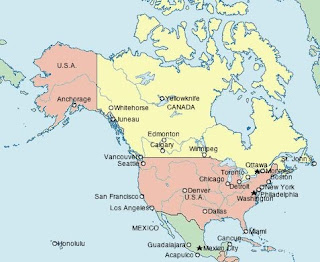
In this story the Norwegian journalist writes: "Hun la særlig vekt på at Canada gjerne vil lære fra samene i Norge når det gjelder inuittenes rettigheter, særlig med tanke på at inuittene i delstaten Nunavut dette året kan feire tiårsjubileum siden starten av arbeidet med å danne et hjemmestyre." The territory of Nunavut in Canada, it is a territory. Canada does not have states. It is divided politically by 10 provinces (provins) and three territories. Mexico and the USA are the only two countries in North America with states, Canada does not.
2) En agurk på bunnen (EGON HOLSTAD) 4 October 2006
http://www.nordlys.no/kultur/egon/article2330096.ece
Posted by Norwegian Media Watch at 2:01 PM

0 comments:

Post a Comment

Newer Post Older Post Home
Subscribe to: Post Comments (Atom)

"OUR FOREFATHERS WILLED THIS COUNTRY INTO BEING" Canadian Prime Minister Pierre Elliot Trudeau,1976

"OUR FOREFATHERS WILLED THIS COUNTRY INTO BEING" Canadian Prime Minister Pierre Elliot Trudeau,1976
“I know a man whose school could never teach him patriotism, but who acquired that virtue when he felt in his bones the vastness of his land, and the greatness of those who founded it.” - Pierre Trudeau, 15th Prime Minister of Canada / 15e Premier Ministre du Canada

Discover Canada / Découvrir le Canada - The Rights and Responsibilities of Canadian Citizenship

Discover Canada / Découvrir le Canada - The Rights and Responsibilities of Canadian Citizenship
The Canadian Government's citizenship guide, to be read by the 250,000+ new immigrants who arrive in Canada each year. In 2007 for example, Canada received 236,760 new immigrants. The top ten sending countries were China, India, Philippines, Pakistan, United States, United Kingdom, Iran, South Korea, Colombia, and Sri Lanka, closely followed by France, and Morocco. "According to Canada's Immigration Program (October 2004) Canada has the highest per capita immigration rate in the world." The Canadian citizenship Guide also includes the Canadian oath of citizenship: "I swear (or affirm) that I will be faithful and bear true allegiance, to Her Majesty Queen Elizabeth the Second, Queen of Canada, Her Heirs and Successors, and that I will faithfully observe the laws of Canada, and fulfil my duties as a Canadian citizen."

A SAMPLING OF COMMENTS RECEIVED FROM NORWEGIAN MEDIA AND CANADIAN READERS

The sloppiness and laziness of the Norwegian media [about Canada] has long been a pet peeve of mine - Canadian reader living in Oslo, Norway

The most pathetic case on your site was the paper that carefully considered whether to correct a simple mistake (Vancouver, USA), then made a conscious decision not to do so. Incredible! - Canadian reader living in Stavanger, Norway

Our editor in Chief is actually impressed by the way you spend time and energy on this. He always says that [our newspaper] has been better in this area just because of you - Large Norwegian Daily Newspaper, Oslo

Thanks for the information. The article is corrected - DinSide

Det korrekte er selvfølgelig at Canada har provinser og territorier. Ikke delstater - Trønder-Avisa

First of all; thank you for your feedback! VG Nett always appreciate that our readers get back to us, either we do something right or wrong, and of course you are right regarding the numbers in the report. This was a story we picked up from a news agency, and I am afraid that I got it terribly wrong in converting the numbers from the original currency to Norwegian kroner (NOK). As you can read here, the wrong numbers are now removed from the article and replaced with the correct ones - VG Journalist

Nea Radio beklager og korrigerer umiddelbart.Vi ønsker for øvrig både "vaktbikkjer" og andre en hyggelig dag! - NeaRadio

Thank you for your input. We have now made the correction at www.nih.no - (Norwegian School of Sports Sciences)

Corrected mvh - Smaalenene.no

Thank you for your e-mail. I insure you, we will remind our staff to recommend Canadien Dollars for Norwegians travelling to Canada" - Major Norwegian Bank

Excellent observation...How do you pick up all of these details? - DinSide

Thank you for contacting us - Norwegian newspaper

Hi there, thank you for pointing that out. We will not correct the story, but we will try to add a note to it, explaining that Cohen is a Canadian... - Driva

Thank you for the notice. The information is based on a press release from a norwegian news agency, but we will correct the mistake - Heroynytt

Thanks for letting me know about the mistake in my article. It was a typo, and I apologize. The error has been fixed now - Norwegian newspaper

Takk for innspel. Det er riktig, eg skulle ha skrive 'over 3000 kroner - Teknisk Ukeblad

...men korrigerer feilen nå. Takk for bemerkningen! - Amobil

Thanks for noticing us about our mistake. It is now corrected. If you find any other information about Canada or Canadian universities in our web site, that need corrections or updates, I would appreciate you told me - University of Bergen

Takk for korrigeringen. Da er det rettet. Ha en god dag! - Tidsskriftet Film & Kino

"Vær Varsom-plakaten / Code of Ethics of the Norwegian Press" - Norsk Presseforbund

"Vær Varsom-plakaten / Code of Ethics of the Norwegian Press" - Norsk Presseforbund
"4.13. Incorrect information must be corrected and, when called for, an apology given, as soon as possible...4.13. Feilaktige opplysninger skal rettes og eventuelt beklages snarest mulig...Ethical Code of Practice for the Press (printed press, radio and television). Adopted by the Norwegian Press Association November 25th, 2005. Each editor and editorial staff member is required to be familiar with these ethical standards of the press, and to base their practice on this code. The ethical practice comprehends the complete journalistic process from research to publication." (Photo: NP)

"Canadian cities boast the highest quality of life in North America."

"Canadian cities boast the highest quality of life in North America."
The Canadian city of Vancouver above on the Canadian West Coast. "Canadian cities boast the highest quality of life in North America, with [the Canadian cities of] Vancouver, Toronto, Ottawa, Montreal and Calgary all ranking higher than major U.S. cities, according to a global survey released today. Vancouver has the best quality of living ..." - Globe and Mail Newspaper (2009). Sadly, many of these Canadian cities have been incorrectly located in a foreign country - the "USA" - in several Norwegian stories.

THE DOMINION OF CANADA - Land of the Midnight Sun / La terre du Soleil de minuit

THE DOMINION OF CANADA - Land of the Midnight Sun / La terre du Soleil de minuit
SOME BASIC INFORMATION ABOUT CANADA: CANADIAN GOVERNMENT, FRENCH AND ENGLISH LANGUAGES OF CANDA, CANADIAN POLITICS, CANADIAN CURRENCY, AND OTHER CANADIAN INFORMATION BELOW

Le drapeau canadien / The National Flag of Canada

Le drapeau canadien / The National Flag of Canada
"Canada’s maple leaf flag was proclaimed by Queen Elizabeth II to take effect on February 15, 1965 – the day it was first raised over Parliament Hill in Ottawa and in thousands of communities from coast to coast to coast."

Les armoiries royales du Canada / The Royal Arms of Canada

Les armoiries royales du Canada / The Royal Arms of Canada
"Desiderantes Meliorem Patriam" (Ils aspirent à une meilleure patrie / They desire a better country)

The Canadian Monarchy - Sa Majesté la reine Elizabeth II / Her Majesty Queen Elizabeth II

The Canadian Monarchy - Sa Majesté la reine Elizabeth II / Her Majesty Queen Elizabeth II
Queen Elizabeth II has visited Canada 23 times, more than any other Commonwealth nation. The Queen is the Canadian Head of State; the Canadian Prime Minister is the head of government. "As Queen of Canada, I have had the privilege of speaking to you on numerous occasions since my first visit in 1951. In doing so, I have attempted to convey the admiration and optimism I feel for this land and her diverse people. Your enduring ties to the Crown stand not only for a respect for heritage, but also for the principles of peace, order and good government developed by the Fathers of Confederation who envisaged and worked so diligently to make this country a reality. These nation builders entrusted these principles to us and we do well to remember this as we dedicate ourselves to building a better future for the people of this great country...It is a privilege to serve you as Queen of Canada to the best of my ability, to play my part in the Canadian identity, to uphold Canadian traditions and heritage, to recognize Canadian excellence and achievement, and to seek to give a sense of continuity in these exciting, ever-changing times in which we are fortunate enough to live." - Queen Elizabeth II, Queen of Canada. The Fathers of Canadian Confederation delibertaly chose to model Canada's system of government off of Great Britain's with the British Monarch and Crown as part of the Canadian system.

Gouverneur général du Canada / Governor General of Canada

Gouverneur général du Canada / Governor General of Canada
His Excellency the Right Honourable David Johnston / Son Excellence le très honorable David Johnston. "The role of the governor general dates back nearly 400 years to 1608 when Samuel de Champlain acted as the governor of New France [Canada]. He established what has become the oldest continuing public office in Canada [and North America]. Canada became a country at Confederation in 1867. Our system of government is a parliamentary democracy and a constitutional monarchy. Queen Elizabeth II is Queen of Canada and Head of State. Sworn in on September 27, 2005, the Right Honourable Michaëlle Jean, 27th Governor General since Confederation, represents the Crown in Canada and carries out the duties of head of State." - Rideau Hall

Speech from the Throne / Discours du Trône

Speech from the Throne / Discours du Trône
Her Excellency the Right Honourable Michaëlle Jean, former Govenor General of Canada reading the Speech from the Throne officially opening a new session of the Canadian Parliament (Photo: CBC).

Le Premier ministre du Canada / The Prime Minister of Canada

Le Premier ministre du Canada / The Prime Minister of Canada
22e premier ministre du Canada / 22nd Prime Minister of Canada since Canadian Confederation.

Prime Ministers of Canada since Confederation (1867) / Les Premier ministres du Canada (1867-2009)

Prime Ministers of Canada since Confederation (1867) / Les Premier ministres du Canada (1867-2009)
"Let us be English or let us be French . . . and above all let us be Canadians." - Sir John A. Macdonald 1st Prime Minister of the Dominion of Canada at Confederation.

Canadian Charter of Rights and Freedoms / Charte Canadienne des droits et libertés (1982)

Canadian Charter of Rights and Freedoms / Charte Canadienne des droits et libertés (1982)
The Canadian Charter of Rights & Freedoms guarantees certain political and civil rights of people in Canada from the policies and actions of all levels of government. It is designed to unify Canadians around a set of principles that embody those rights. The Charter was signed into law by Queen Elizabeth II, Queen of Canada on April 17th 1982."

L’Ordre du Canada / The Order of Canada - Civilian Decoration

L’Ordre du Canada / The Order of Canada - Civilian Decoration
The "Order of Canada" is the centrepiece and highest civilian reward of Canada’s honours system and recognises a lifetime of outstanding achievement, dedication to the community and service to the nation. The Order recognises people in all sectors of Canadian society. Their contributions are varied, yet they have all enriched the lives of others and made a difference to Canada. The Order of Canada’s motto is DESIDERANTES MELIOREM PATRIAM (They desire a better country).

Canadian Currency: From French Livre to the Pound Sterling to Canadian Dollar.

Canadian Currency: From French Livre to the Pound Sterling to Canadian Dollar.
Prior to the British take over of Canada, the French "livre" was the currency of Canada. With the British take over in 1763, the Pound Sterling became common currency. By 1871, the Canadian Parliament passed the Uniform Currency Act, unifying Canadian currency as the Canadian dollar. The Canadian $5, $10, $50, & $100 notes feature Canadian Prime Ministers on the front, and various Canadian themes on reverse. The Canadian $20 features Queen Elizabeth II, Queen of Canada. There are not paper notes in Canada under $5 Canadian dollars. "Many dollar currencies around the world were initially based on the Spanish dollar and other 8-reales coins...As of 2007, the Canadian dollar was the 7th most traded currency in the world." (Wikipedia). The smallest paper note in Canadian currency is the $5 note. A common problem in some Norwegian media stories is often confusing Canadian currency (CAD$) from Canadian stories, with the USA's currency (USD$) thinking or assuming Canadian currency is the USA's currency. This of course would be a like a Canadian journalist writing a story about Norway with and using Sweden's currency, assuming or thinking this is the national currency of Norway. There are 26 world-wide circulating currencies named dollar: Australian dollar (1966) · Bahamian dollar (1966) · Barbadian dollar · Belize dollar · Bermudian dollar · Brunei dollar · Canadian dollar (1858) · Cayman Islands dollar · Cook Islands dollar · East Caribbean dollar · Fijian dollar · Guyanese dollar · Hong Kong dollar · Jamaican dollar · Kiribati dollar · Liberian dollar · Namibian dollar · New Zealand dollar (1967) · Samoan tala · Singapore dollar (dolar, வெள்ளி) · Solomon Islands dollar · Surinamese dollar · New Taiwan dollar · Trinidad and Tobago dollar (1964)· United States dollar (1758) · Zimbabwean dollar (Source: Wikipedia).

Canada's Toronto Stock Exchange on Bay Street. The Heart of Toronto's Financial District.

Canada's Toronto Stock Exchange on Bay Street. The Heart of Toronto's Financial District.
The Toronto Stock Exchange (TSE) now known publicly as the "TMX" on Bay Street (Canada's version of "The City" in London, or "Wall Street" in the USA) is the largest stock exchange in Canada, the third largest in North America and the seventh largest in the world by market capitalisation. Based in Canada's largest city, Toronto." Major Canadian companies like Research in Motion (BlackBerry), IMAX Corporation, Canadian National, Canadian Pacific, Royal Bank of Canada, and other International companies are listed and traded in Canada on the TSX. (Photo: TMX)

Six Canadian Time Zones / Six fuseaux horaires du Canada

Six Canadian Time Zones / Six fuseaux horaires du Canada
Time Zones were originated in 1884 by a Canadian- Sir Sandford Fleming. The map above shows Canada's six time zones as legislated and as observed (Photo: Her Majesty the Queen in right of Canada).

La carte du Canada / Map of Canada

La carte du Canada / Map of Canada
The world's 2nd largest country after Russia - 9,984,670 km2 (31x the size of Norway). Canada is divided internally by 10 provinces and three territories. Canada has been using the French system of provinces for over 345 years, since 1663, when Canada (New France) became a Royal Province of France. Canada's 10 provinces & territories are listed below. (Canada total population: 33 million).

CANADA'S INTERNAL DIVISIONS: TEN PROVINCES & THREE TERRITORIES BELOW........ [Special Note: According to the Canadian Government (Statistics Canada) figures from the 2001 Canadian national census, 363,760 Canadians, or 1.23% of Canadians, reported themselves as having Norwegian ethnic background. The figures are also broken down by provinces and territories below for the benefit of Norwegian readers of this site. Most Norwegians immigrating to Canada from Norway and the USA settled in the two farthest western Canadian provinces of British Columbia and Alberta].

Province of British Columbia / Province du Colombie-Britannique (1871)

Province of British Columbia / Province du Colombie-Britannique (1871)
In the spring of 1870 the British colony of British Columbia sent a delegation to negotiate union with Canada. In 1871, British Columbia joined Canada as Canada's 6th province. Population: 4.5 million. (112,045 or 2.90% of Canadians in the province, reported themselves as having Norwegian ethnic background).

Province of Alberta (1905)

Province of Alberta (1905)
Carved of of Canada's Northwest Territories in 1905, by an Act of the Canadian Parliament, Alberta is Canada's oil capital, and Canada's sixth province. Alberta is named after Princess Louise Caroline Alberta (1848–1939), the fourth daughter of Queen Victoria and her husband, Prince Albert. Population: 3.6 million. (120,050 or 4.08% of Canadians in the province, reported themselves as having Norwegian ethnic background).

Province of Saskatchewan (1905)

Province of Saskatchewan (1905)
Also carved out of Canada's Northwest territories and an Act of the Canadian Parliament in 1905, Saskatchewan is home to many Canadians of Norwegian decent. Population: 1+ million. (60,505 or 6.28% of Canadians in the province, reported themselves as having Norwegian ethnic background).

Province of Manitoba (1870)

Province of Manitoba (1870)
Created by an Act of the Canadian Parliament in 1870, Manitoba has the largest French-Canadian population west of Ontario in Canada, over 120,000 lakes, and interestingly enough, the largest group of Canadian of Icelandic ethnic background outside of Iceland. Population: 1.1 million. (15,705 or 1.42% of Canadians in the province, reported themselves as having Norwegian ethnic background).

Province of Ontario (1867)

Province of Ontario (1867)
Formerly known as Upper Canada, and renamed Ontario in 1867, the province is one of the largest in Canada, and home of Canada's largest English speaking city - Toronto, Niagara Falls, and the national capital of Canada - Ottawa. Population: 13.5 million. (41,885 or 0.37% of Canadians in the province, reported themselves as having Norwegian ethnic background).

Province du Québec (1867)

Province du Québec (1867)
Formerly Lower Canada, renamed the province du Québec at Canadian Confederation in 1867. The province is home to the ville de Montréal - the largest French speaking city in Canada - and the second largest French speaking city in the world after Paris. The provincial capital -Ville de Québec - is one of the oldest in Canada (and North America), and a declared a World Heritage Site by UNESCO. In 2009, the ville de Québec celebrated its 401st birthday. Population: 7.7 million. (4,610 or 0.06% of Canadians in the province, reported themselves as having Norwegian ethnic background).

Province du Nouveau-Brunswick / Province of New Brunswick (1867)

Province du Nouveau-Brunswick / Province of New Brunswick (1867)
New Brunswick / Nouveau-Brunswick is one of Canada's Maritime provinces, and home to a large Acadian population. Population: 748,000 (2,490 or 0.35% of Canadians in the province, reported themselves as having Norwegian ethnic background).

Province of Nova Scotia / Nouvelle-Écosse (1867)

Province of Nova Scotia / Nouvelle-Écosse (1867)
Based on Canada's east coast, the province of "New Scotland" has an incredible wealth of cultural heritage that includes Scotish, Gaelic, French, Acadian, Africian-Canadian, and Irish. Population: 940,000 (3,210 or 0.36% of Canadians in the province, reported themselves as having Norwegian ethnic background).

Province of Prince Edward Island / Province de l’Île-du-Prince-Édouard (1873)

Province of Prince Edward Island / Province de l’Île-du-Prince-Édouard (1873)
Prince Edward Island is famous in Canada and around the world for many things; Norwegians would know best the famous "Anne fra Bjørkely" as she is known in Norway. Canada's 7th province joined Canada in 1873. The province, and the provincial capital is know as the "Birthplace of Canada" for the meeting of the Fathers of Confederation in Charlottetown, the provincial capital. Invited to join Canada in 1867, P.E.I., joined later in 1873. Population: 140,000 (325 or 0.24% of Canadians in the province, reported themselves as having Norwegian ethnic background).

Province of Newfoundland and Labrador / Province de Terre-Neuve-et-Labrador (1949)

Province of Newfoundland and Labrador / Province de Terre-Neuve-et-Labrador (1949)
One of most interesting, beautiful, and historic provinces in Canada; Newfoundland and Labrador became Canada's 10th province in 1949. First discovered by the Norse around 1000 A.D., and later by John Cabot in 1497 A.D. sailing for England, the province was once an independent country from 1907 - 1934 A.D., as the Dominion of Newfoundland, constitutionally equal to Canada and Australia. In 1934, Newfoundland voluntarily gave up self-government and reverted back to direct control from London — one of the few countries that has ever voluntarily given up direct self-rule. In 1948, Newfoundlanders and Labradorians voted union with Canada, over independence. Population: 509,000 (1,180 or 0.23% of Canadians in the province, reported themselves as having Norwegian ethnic background).

Yukon (1898)

Yukon (1898)
The Yukon is the smallest and most western of Canada's three federal territories. Created in 1898, it was named after the Yukon River, and perhaps is best known for the Klondike Gold Rush of 1897. Population: 33,400 (1,080 or 3.79% of Canadians in the territory, reported themselves as having Norwegian ethnic background).

Northwest Territories / Les Territoires du Nord-Ouest (1870)

Northwest Territories / Les Territoires du Nord-Ouest (1870)
The present-day territory was created by the purchase of Rupert's Land and the North-Western Territory to the government of Canada in 1870. This immense region, mostly controlled by the Hundson's Bay Company as a private fur trading region, comprised almost all of non-confederation Canada except British Columbia, the coast of the Great Lakes, the Saint Lawrence River valley and the southern third of Quebec, the Maritimes, Newfoundland, and the Labrador coast. Population: 43,000 (585 or 1.58% of Canadians in the territory, reported themselves as having Norwegian ethnic background).

Nunavut (1999)

Nunavut (1999)
The northern territory of Nunavut (2,093,190 km2) meaning "our land" (in Inuktitut) was carved out of the Northwest Territories as a new territory of Canada, as part of a First Nations lands claim agreement between the Canadian Government and the Inuit of the territory. It was the first major change to the Canadian map since the addition of the province of Newfoundland and Labrador in 1949. Population: 31,556 (Nunavut: 85 or 0.32% of Canadians in the territory, reported themselves as having Norwegian ethnic background).

CANADIAN-ENGLISH, CANADIAN-FRENCH, CANADIAN AWARDS, & INTERESTING CANADIANA INFORMATION BELOW

"Talking Canadian Eh" DVD - Canadian Broadcasting Corporation / Radio-Canada

"Talking Canadian Eh" DVD - Canadian Broadcasting Corporation / Radio-Canada
Prior to 1783 in Canada, most Canadians spoke French. After the conquest of Canada by the British from 1758-1763, and the Treaty of Paris in 1763, Canada became part of the British Empire; making Canada today a bilingual country of two official languages - French & English. After 1783, over 50,000 American refugees loyal to Britain left the recently independent United States, and came north to settle in British controlled Canada. With French being the dominant spoken language in Canada in 1783, these refugees are the basis of Canadian-English. And with millions of immigrants to Canada from Great Britain, the United States, and from around the world, Canadian English has been an tug-of-war between British-English and American-English ever since. Today, Canadian English is the language unique to Canadians, and "Talking Canadian" is an interest documentary on Canadian-English, spoken by English-Canadians. “Talking Canadian is....an amusing look at [the Canadian] accent, intonation and vocabulary – [of] how Canadians speak today, and how we will talk in the future…Few of us are aware that the language we speak – the words we use and the way we say them – has less to do with conscious choice than it has to do with our past: when and why we came here, where we settled and the tug of war between British and American influences, which has been part of our lives for centuries.” CBC/SRC

Je parle français: A Portrait of La Francophonie in Canada

Je parle français: A Portrait of La Francophonie in Canada
"Je parle français" brings to life the richness and diversity of French speaking Canada.

Collins Dictionary of Canadian-French

Collins Dictionary of Canadian-French
A guide to contemporary Canadian-French vocabulary and language in the French speaking parts of Canada.

Canadian Oxford Dictionary of Canadian-English

Canadian Oxford Dictionary of Canadian-English
Dictionary of Canadian-English containing 300,000 entries, including about 2,200 true Canadianisms. It provides information on Canadian pronunciation and on Canadian spellings in Canadian-English.

SOME BASIC CANADIAN HISTORY, INFORMATION & LINKS BELOW

1000 A.D. Icelandic Vikings Discover Canada (and North America)

1000 A.D. Icelandic Vikings Discover Canada (and North America)
Leif Eriksson Sights Newfoundland, Canada. "The first confirmed European settlement [in North America], built about A.D. 1000, was the Viking enclave at L’Anse aux Meadows at the tip [of the province] of Newfoundland and Labrador [in Canada]. Discovered in 1960 by Norwegians, the Canadian Government (Parks Canada) has reconstructed the site. It has been declared a UNESCO World Heritage Site. "When occupied, it contained eight sod houses and an iron smelter. This might be the Vinland of Norse sagas, which describe encounters with an unknown people, possibly Dorset or Beothuk." - Canadian Geographic Magazine

1497 A.D. John Cabot Discovers (or re-discovers) the Island of Newfoundland and North America.

1497 A.D. John Cabot Discovers (or re-discovers) the Island of Newfoundland and North America.
Sailing for the English King as John Cabot, Italian navigator and explorer Giovanni Caboto, reaches "new found land" in Canada in 1497. The "new found land" will become the name of the island and later the Province of Newfoundland in Canada. Cabot reaches the same island in Canada the Icelandic Vikings had reached some 500 years earlier. The local monument states: "Cabot's Landing - On the 24th, June, 1497 in the 'Mathew' out of Bristol, England, with a crew of eighteen men, John Cabot discovered the continent of North America. His landfall, 'first land seen,' was believed to have been the lofty headland of North Cape Breton. It is to commemorate this important event that this monument has been erected by the Cape Breton historical society." Above, a Canadian Government monument at the site.

1534 A.D. French explorer Jacques Cartier, claims Canada for France at Gaspé [Canada]

1534 A.D. French explorer Jacques Cartier, claims Canada for France at Gaspé [Canada]
The name "Canada" added to the world map in 1534, with France becoming Canada's first colonial master. French attempts at colonisation of Canada (New France) begins in 1541. "This colony was the first known European settlement in modern day Canada since the c.1000 AD L'Anse aux Meadows Viking village in northern Newfoundland [in Canada]. Its rediscovery has been hailed by archaeologists as the most important find in Canada since the L'Anse aux Meadows rediscovery."

1605 A.D. L'Habitation de Port-royal / Port Royal is built by the French in Nova Scotia, Canada

1605 A.D. L'Habitation de Port-royal / Port Royal is built by the French in Nova Scotia, Canada
L'Habitation de Port-royal / Port Royal is the first permanent European settlement in North America north of Florida, having been founded in 1605 by Pierre Dugua, Sieur de Mons and Samuel de Champlain.

1608 (July 3rd) A.D. Founding of the City of Québec, and the heart of French Canada

1608 (July 3rd) A.D. Founding of the City of Québec, and the heart of French Canada
Ville de Québec is one of the oldest European settlements in Canada (and North America), and one of the most beautiful cities in Canada. While many of the major cities in Mexico date from the sixteenth century, among cities in the Canada only St. John's, Newfoundland and Labrador (1583); Port Royal, Nova Scotia (1605); and Tadoussac, Quebec (1600) are older than Quebec City. The walls surrounding Vieux-Québec are the only remaining fortified city walls in North America north of Mexico. In 2009, the city celebrated its 401st anniversary.

1730s-40s A.D. Explorations of Canadian Pierre Gaultier de Varennes et de La Vérendrye

1730s-40s A.D. Explorations of Canadian Pierre Gaultier de Varennes et de La Vérendrye
Canadian fur trader, solider, and explorer (born in Trois-Rivières, Canada), along with his sons, discover large parts of Western Canada, claiming the land for France. He is also the first white man to discover and reach what is today the USA states of North Dakota, and parts of Minnesota; also claiming this land for France. Two of his sons penetrated further into today's mid-western United States, reaching the Big Horn Mountains (Wyoming state), the Black Hills (South Dakota state). This Canadian claims of this land for Canada's colonial master - France. This Canadian explorer names the large point (the large fork) in the la rivière Rouge (Red River) and sets up a trading post at what becomes the North Dakota (USA) city of "Les Grandes Fourches" (originally named in French, and in 1870 the Americans change it to English as Grand Forks). His sons build Fort Pierre (now the South Dakota state capital of Pierre), and placed an inscribed lead tablet that reads in Latin: “In the twenty-sixth year of the reign of Louis XV, the most illustrious Lord, the Lord Marquis of Beauharnois being Viceroy, 1741, Peter Gaultier de la Verendrye placed this.” La Verendryes and his sons are just some of the incredible number of born in Canada, French speaking Canadian explorers from Quebec that discover, name, and claim much of North America for France. In 1803 the United States purchases from France (Louisiana Purchase / Vente de la Louisiane) 2,147,000 km2 of French territory that includes North Dakota, South Dakota, Minnesota adding additional land to the USA's westward expansion in North America.

1758-1763 A.D. British Conquest of Canada & the Seven Years' War

1758-1763 A.D. British Conquest of Canada & the Seven Years' War
Starting in 1758, the British began their campaign to remove the French from Canada and North America. The defeat of the French at Louisbourg (Nova Scotia) in 1758; the fall of Quebec in 1759; the surrender of Montreal to the British in 1760; and the handing over of Canada by treaty to the British in 1763 means the end of the French Empire in North America. In 1763, Britain becomes colonial masters of France’s French speaking Canada. Painting above depicts the Battle of the Plains of Abraham, and the fall of the Quebec to the British, September 13th, 1759. The French and the Canadiens endured a summer long siege of the city by 20,000 British troops, and 200 British ships (1/4 of the entire British navy).

1774 A.D. The Quebec Act (Canada)

1774 A.D. The Quebec Act (Canada)
In 1774, the Quebec Act is passed by the British parliament relating to the governance of the Province of Quebec (formerly known Canada / New France, now renamed the Province of Quebec in the British Royal Proclamation of 1763). The Quebec Act maintains French civil law, guarantees the Canadians freedom to practice their Catholic religion, and recognises and expands Canada's boundaries prior to 1763 (which is now part of USA states of Illinois, Indiana, Michigan, Ohio, Wisconsin and parts of Minnesota). The Act helps to protect and maintain French laws and customs of the Canadians (still 99% French speaking) in North America. In the still British controlled American colonies, American colonial leaders and settlers see the Quebec Act very differently. They are “enraged when Québec acquire[s] the Indian territory, which they perceived to be theirs by right; they considered the Quebec Act one of the "Intolerable Acts" (along with the Boston Port Act, etc.) which contributed to the outbreak of the AMERICAN REVOLUTION.” – Canadian Encyclopaedia

1775 A.D. American Revolutionary Forces Invade Canada at Quebec

1775 A.D. American Revolutionary Forces Invade Canada at Quebec
1775 A.D. Canada is invaded at Quebec by American colonial rebel forces during the U.S. War of Independence in the winter of 1775. American Continental Army Brigadier-General Richard Montgomery and General Benedict Arnold, travelled with great difficulty through the wilderness of Maine to invade Canada at Quebec. The two American forces joined there, but were defeated by the British and Canadians at the Battle of Quebec in December 1775. The photo above shows two plaques (one in French, one in English) marking the spot on Sault-au-Matelot in Quebec City where the Americans were defeated, and the city was saved. The plaques read "Here stood her old and new defenders uniting gaurding saving CANADA defeating Arnold at the Sault-au-Matelot barricade on the last day of 1775 GUY CARLETON commanding at Quebec."

1776 A.D. Canadians Reject the American Revolution

1776 A.D. Canadians Reject the American Revolution
"The United States declared independence [from Great Britain] on July 4, 1776. The American Continental Congress attempted to convince Canadians to join them [to rise up against their British Conquerors from 1758-1763] in a poorly-worded letter, but French Canadians chose to stay neutral. This was attributed in part to the Québec Act, 1774, which protected the Catholic faith and the social hierarchy - something they doubted that Americans would do." Other British colonies that would one day be part of Canada, like Newfoundland, Nova Scotia, and Prince Edward Island, are not interested in joing the American rebels and their revolution.

1783 A.D. Canada Remains Loyal to Great Britain as the United States Receives Independence

1783 A.D. Canada Remains Loyal to Great Britain as the United States Receives Independence
Canada and Canadians remain loyal to Great Britain as the United States gains independence from Great Britain with the Treay of Paris in 1783. The British presence on the map of North America is reduced to half the continent, mainly Britain's French and English speaking colonies above the Great Lakes. This area (red on map) of North America is Canada and "British North America." In 1783, the majority of Canadians are French speaking. The influx of American refugees to Canada in 1783-1784 changes English in Canada forever.

1783-1784 A.D. Canada Receives 50,000 English speaking American Refugees Loyal to Great Britain

1783-1784 A.D. Canada Receives 50,000 English speaking American Refugees Loyal to Great Britain
Loyalty to Great Britain for the Americans on the loosing side of the U.S. War of Independence, meant exodus and exile for many by their fellow Americans for being loyal to Britain in their fight not to become independent from Great Britain. Some 100,000 English speaking Americans, loyal to Great Britain became American refugees from the recently independent United States. The migration of these American refugees "loyal" to the Great Britain and the British Crown causes the largest mass exodus of refugees in the history of North America. Many of these 100,000 exiled "Loyalists" move to other British lands, but nearly half seek sanctuary in British controlled Canada, pioneering untamed lands in parts of Canada given to them by the British Crown in what is today the provinces of New Brunswick, Ontario, and other parts of Canada. Even with this influx of English speaking refugees, Canada is still dominated by French speaking Canadians, and this almost "overnight" arrival of new Loyalists with "American-English" dialect becomes part of the working basis for Canadian-English. Almost overnight, the English language in Canada is permanently changed, as the Loyalists grow in numbers. Millions of British immigrants are brought directly to Canada from England, Scotland, & Ireland, and soon start to out number the larger French speaking Canadians and the French language in Canada.

1812 A.D. The War of 1812 (1812 - 1815). In 1812, the United States invades Canada.

1812 A.D. The War of 1812 (1812 - 1815). In 1812, the United States invades Canada.
In 1812 the United States declares war on Great Britain, and British controlled Canadian territory is invaded by the United States in an attempt to take Canada from the British and Canadians by force. From 1812 onwards, Canada is invaded and, at times, partially occupied by U.S. troops until the American invaders are beaten back to the U.S. by British and Canadian forces. The War represents the first ever foreign invasion of a country by the United States, the first ever war loss of the United States (their goal being to capture Canada), and the founding of the U.S. national anthem. Future (3rd) American President Thomas Jefferson boastfully claims the capture of Canada is "a mere matter of marching." Henry Clay, 19th century American statesman from Kentucky (also future U.S. Secretary of State) claims "We have Canada as much under our command as Great Britain has the ocean... God has given us the power..." In Canada, British & Canadian victories unites the Canadian people to help the British fight the American invaders, and sets the stage for the emergence of the Canadian nation and Canadian nationality in North America, and within the British Empire. In 1819, the U.S. acquired Florida on its souther border, after picking a fight with Spain. In Canada, fearing the United States during the U.S. Civial War in the 1860s, four of Britain's Canadian colonies (Upper Canada - Ontario, Lower Canada - Quebec, Nova Scotia, and New Brunswick) unite for their protection, and form a new nation - the Dominion of Canada in 1867. By 1871, Canada stretches from the Atlantic to the Pacfic as new provinces are added to the Canadian Nation. Canada's independence from Britain in 1867 represents the first time in world history colonists negotiate peacefully with their mother country for independence.

1860s A.D. North to Canada for Freedom: Canada & the Underground Railway

1860s A.D. North to Canada for Freedom: Canada & the Underground Railway
“Canada is not merely a neighbour to Negroes. Deep in [African-American] history of struggle for freedom Canada was the North Star. The Negro slave, denied education, de-humanized, imprisoned on cruel plantations, knew that far to the north a land existed where a fugitive slave, if he survived the horrors of the journey, could find freedom. The legendary underground railroad started in the south and ended in Canada. The freedom road links us together. Our spirituals, now so widely admired around the world, were often codes. We sang of 'heaven' that awaited us, and the slave masters listened in innocence, not realizing that we were not speaking of the hereafter. Heaven was the word for Canada and the Negro sang of the hope that his escape on the underground railroad would carry him there. One of our spirituals, 'Follow the Drinking Gourd', in its disguised lyrics contained directions for escape. The gourd was the big dipper, and the North Star to which its handle pointed gave the celestial map that directed the flight to the Canadian border.” - Words of American Dr. Martin Luther King Jr. (Interview on Canadian Broadcasting Corporation Massey Lectures, 1967). During the 19th-century, thousands of enslaved and many free African-Americans fled the United States and made their way to Mexico and Canada where they could live as free citizens. "Here the slave found freedom. Before the United States Civil War 1861-65 Windsor [in Canada] was an important terminal of the Underground Railway. Escaping from bondage, thousands of fugitive slaves from the [U.S.] South, men women and children landing near this spot found in Canada friends, freedom, protection under the British flag." - Historical plaque - Windsor, Ontario, Canada.

1864 A.D. (September) Colonial Delegates Meet at Charlottetown, P.E.I. to Discuss Canadian Union

1864 A.D. (September) Colonial Delegates Meet at Charlottetown, P.E.I. to Discuss Canadian Union
Thirty-six enterprising men, known as the "Fathers of Confederation," shared the vision for uniting Britain's Canadian colonies into a great country. Their vision and efforts in the 1860s create a new nation - The Dominion of Canada - out of Britain's remaining French and English speaking colonies in North America. The foundation of modern Canada is laid, and by 1949, 10 provinces make up the Canadian nation and two territories, a third territory in 1999 is created. United as a federation of French and English speaking Canadians for strength and security, Canada is the only Constitutional Monarchy in North America.

1864 A.D. (October) Second Conference, at Québec to Discuss Confederation (Canadian Union)

1864 A.D. (October) Second Conference, at Québec to Discuss Confederation (Canadian Union)
"The Québec Conference was the second delegate conference leading to creation of the Dominion of Canada in 1867 by Canadian and colonial delegates. After the enthusiastic reception given to the delegates from the Province of Canada at the Charlottetown Conference in September 1864, John A. Macdonald asked Governor Monck to invite representatives from the three Maritime colonies and Newfoundland to meet with the United Canada delegates in Québec in October 1864. In Charlottetown, the Canadian delegation had proposed the foundations for a new country: preservation of ties with Great Britain; residual jurisdiction left to a central authority; a bicameral system including a Lower House with representation by population (rep by pop) and an Upper House with representation based on regional, rather than provincial, equality; responsible government at the federal and provincial levels; and the appointment of a governor general by the British Crown."

1867 (March 29th) A.D. Queen Victoria gives Royal Assent to the British North America Act

1867 (March 29th) A.D. Queen Victoria gives Royal Assent to the British North America Act
Canadian Confederation (Union of Britain's French and English speaking colonies of Upper Canada, Lower Canada, Nova Scotia, and New Brunswick) becomes law as an Act of the British Parliament in March 1867, to take affect 1st of July 1867 for the union and independence of the Dominion of Canada from Great Britain. The Dominion of Canada becomes the 4th modern country in the world to form a Confederation as a new nation after the Germany Confederation, Switzerland, and the USA.

1867 (1 July) A.D. The formation of the Dominion of Canada on the 1st of July.

1867 (1 July) A.D. The formation of the Dominion of Canada on the 1st of July.
On the 1st of July 1867, Canada celebrates its independence from Great Britain, and the birth of a new nation in North America. Until 1982, the 1st of July national holiday is celebrated as Dominion Day. After 1982, the holiday is changed to Canada Day / La fête du Canada. "For many in the new Dominion of Canada, the day held magic and promise. One young girl in Hamilton, Ontario described the evening celebrations in her diary.'There was the dark and then there was the light of a candle... then there was the opening of the great door, and the rush of cool, fresh air, and the deep darkness. 'Oh, Look!' said a voice. The sky was suddenly full of shooting stars. There were fountains of stars, coloured red and green and blue... 'This is the First of July, in the year eighteen hundred and sixty seven,' (my) father said, 'always remember this day, and this night. You are a very lucky little girl, to be a child in Canada, today.'" (CBC)

1873 A.D. Canada Creates the North West Mounted Police (Det Kongelige Kanadiske Ridende Politi)

1873 A.D. Canada Creates the North West Mounted Police (Det Kongelige Kanadiske Ridende Politi)
The Royal Canadian Mounted Police (RCMP) / Gendarmerie royale du Canada (GRC) were “born out of a need for a national police force to implement [Canadian] law in Canada’s newly acquired western territories, the Royal Canadian Mounted Police has evolved into a world-renowned organization of more than 28,000 people.” In May 1873, the Parliament of Canada established a mounted police force known as the North-West Mounted Police to protect and maintain Canadian sovereignty in the Canadian West from encroachment of American Whisky traders illegally crossing the Canadian border into Canada to sell whisky and other goods to Aboriginal Canadians with dire effects. Fearing the United States and their efforts to try to acquire Canada's western territory, Sir John A. MacDonald, the Canadian Prime Minister at the time, wrote of his concern, saying, ''It is quite evident to me that the United States Government are resolved to do all they can short of war to get possession of the western territory and we must take immediate and vigorous steps to counteract them.'' To counter the threat of possible U.S. annexation of Canadian lands in the Canadian West, Prime Minister Macdonald creates a new Canadian Province in the West - Manitoba - in 1870, and creates the North-West Mounted Police, a paramilitary force used to push the illegal Amerian whisky traders out of the Canadian West, protect Canadian sovereignty from the United States, and help to establish law and order, and peaceful settlement of the Canadian West before mass settlement soon to begin.

1897 A.D. Gold is Discovered in the Klondike in Canada's Yukon

1897 A.D. Gold is Discovered in the Klondike in Canada's Yukon
In 1896 gold is discovered in the Klondike in northern Canada, and the Klondike Gold Rush begins. In 1897, news spreads and the frenzied rush of gold prospectors to Canada’s north compels the Canadian Government to pass the Yukon Act in parliament, creating the Yukon Territory in 1898 to help ensure Canadian sovereignty in the Canadian north. Canada’s North-West Mounted Police (renamed the Royal Canadian Mounted Police / GRC in 1921) on February 26, 1898 hoist the Britain’s Union Jack (Canada’s flag at the time) at the Chilkoot Summit ready (above photo) to collect customs from prospectors entering Canadian territory. (Yukon Archives, E.J. Hamacher fonds (Margaret and Rolf Hougen collection), 2002/118 #872).

1903 A.D. Roald Amundsen successfully traverses Canada's Northwest Passage in the Canadian Arctic

1903 A.D. Roald Amundsen successfully traverses Canada's Northwest Passage in the Canadian Arctic
Norwegian explorer Roald Engelbregt Gravning Amundsen becomes the first person to successfully navigate the Northwest Passage in Canada's Northwest Territories in northen Canada. Today, Gjøa Haven is a community located on the southeast coast of King William Island where Amundsen spent two winters with his ship the Gjøa. The Gjøa is on display at the Fram Museum in Oslo, Norway. His achievement is a well known event in Canadian and Norwegian history. In 2003, the Canadian Coast Guard (CCG) names one of its icebreakers "CCGS Amundsen" in his honour.

1930 A.D. The Canadian Government acquires 3 major islands discovered by Norwegian Otto Sverdrup

1930 A.D. The Canadian Government acquires 3 major islands discovered by Norwegian Otto Sverdrup
Canada acquires for $67,000 (Canadian currency) three major Norwegian discovered islands (Axel Heiberg, Ellef Ringnes, & Amund Ringnes) in the Canadian Arctic from the Norwegian explorer who had discovered and claimed them for Norway (see map at bottom).

1936 A.D. Monument commémoratif du Canada à Vimy / Canadian National Vimy Memorial (France)

1936 A.D. Monument commémoratif du Canada à Vimy / Canadian National Vimy Memorial (France)
“To the valour of their countrymen in the Great War and in memory of their sixty thousand [Canadian] dead this monument is raised by the people of Canada.” (Inscription on monument). For a nation of just eight million people at the time of the Great War, Canada's war effort was widely regarded as remarkable. In World War One a total of 619,636 men and women served in the Canadian forces, and of these 66,655 were killed and another 172,950 were wounded. For Canada's war dead and sacrifice this Canadian War Memorial is rased in France in 1936.

1939-1945 A.D. World War 2 - September 10, the Government of Canada declares war on Germany.

1939-1945 A.D. World War 2 - September 10, the Government of Canada declares war on Germany.
Above, a Canadian WWII recruting poster. "At the beginning of the war, Canada was the oldest Dominion in the British Commonwealth. As a nation, it was, for the most part, reluctant to return to war. Nonetheless, Canadians entered the Second World War united with Great Britain, through Commonwealth association, and from a population of only 11 to 12 million, [Canada] eventually raised very substantial armed forces. Over the course of the war, 1.1 million Canadians served in the [Canadian] army, navy, and air force. Of these more than 45,000 lost their lives and another 54,000 were wounded." (Wikipedia). "With France under occupation and the Americans maintaining neutrality, Canada became Britain's leading ally in the early years of the Second World War." (CBC). Nationalities from all over the world train in Canada as pilots in the British Commonwealth Air Training Plan. The BCATP graduates "131,533 pilots, observers, flight engineers, and other aircrew for the air forces of Canada, Britain, Australia, and New Zealand", and also 680 Norwegians.

1962 A.D. Canada Launches the Alouette 1 Satellite

1962 A.D. Canada Launches the Alouette 1 Satellite
Canada becomes the third country after the Soviet Union and the USA, to put a satellite into orbit. Alouette comes from the French word "skylark" and from the title of a Canadian folk-song "Alouette." "It embodies Canadian leading expertise and excellence in space science and technology which continues today through critical space initiatives to deliver benefits to Canadians." - Dr. Marc Garneau, President of the Canadian Space Agency / Agence spatiale canadienne (Photo: Canadian Space Agency / Agence spatiale canadienne).

2004 A.D. Canada Post Issues Sverdrup Canadian Stamp

2004 A.D. Canada Post Issues Sverdrup Canadian Stamp
Canada Post / Postes Canada issues a series of Canadian stamps to commemorate Otto Sverdrup's (1854-1930) explorations in the Canadian Arctic.

2006 A.D. Canadian BlackBerry® Telephones Launched in Norway.

2006 A.D. Canadian BlackBerry® Telephones Launched in Norway.
Canada's Research In Motion® & Trigcom Introduce the Canadian BlackBerry In Norway. Sadly, most Norwegian coverage of this Canadian phone focus on its success in the USA, and often refers to the company and technology as being from the USA and being American (Photo: BlackBerry)

"How the Battle of the Plains of Abraham [in Canada] changed the World" By Mr. D. Peter MacLeod

"How the Battle of the Plains of Abraham [in Canada] changed the World" By Mr. D. Peter MacLeod
A 1745 Map Showing Quebec in Canada, the Administrative Headquarters for Canada, New France & the French Empire in North America. (Mr. D. Peter MacLeod is a historian at the Canadian War Museum. This article is excerpted from the book Northern Armageddon: The Battle of the Plains of Abraham © 2008.")
"Two hundred and fifty years ago [1759] this summer, a long English campaign to drive France out of Canada came to a bloody end in a few minutes of savage, close-range musket fire on the plains outside the walls of Quebec City. But as D. Peter MacLeod writes, din from the battle over what Voltaire once called "a few acres of snow" still echoes both here at home and around the globe. Finally, the French and British governments decided that they had had enough. Peace negotiations began in the fall of 1762; delegates concluded the Treaty of Paris on Feb. 10, 1763. During the negotiations, the French had one last chance to try to get Canada back. They chose to trade Canada for Guadeloupe, a Caribbean sugar island, and pushed hard and successfully for access to the Newfoundland fisheries. With the signing of the Treaty of Paris, the Plains of Abraham became one of the great battles of world history. Under the terms of the treaty, France ceded all its possessions in northeastern North America to Britain. This included French claims to First Nations territory east of the Mississippi. The British agreed to respect the Catholicism of Canadians and gave French subjects 18 months to depart for France if they desired. They ceded the Islands of Saint-Pierre and Miquelon to France, to serve as a base for French fishers, and allowed the French to fish in the Gulf of St. Lawrence and dry their catch along part of the Newfoundland coast. Britain returned Cuba and the Philippines to Spain; Spain ceded Florida to Britain and (under a separate agreement with France) received in exchange all "French" territory west of the Mississippi. This included the French colony of Louisiana and a vast tract of land belonging to First Nations extending from the Gulf of Mexico to beyond what is now the Canadian-American border. All of eastern North America from the Gulf of Mexico to Hudson Bay and the Atlantic to the Mississippi River now came under British sovereignty, at least as far as Europeans were concerned. The British occupation of Canada had become a conquest.

Imperial America
For the world at large, the removal of a great power from the North American mainland was far more important than the people it left behind. National humiliation aside, France came out of the Seven Years' War in North America very well. The war had, in effect, downsized their expensive and unproductive land-based North American empire to a hugely valuable fishing station on the islands of Saint-Pierre and Miquelon. Moreover, as a British possession, Canada would prove to be far more dangerous to Britain than it had ever been in the hands of the French. Long before the outbreak of the Seven Years' War, most of Britain's North American colonies were nascent independent states. Governed by local elites, they were self-financing, economically and demographically robust, and capable when necessary of raising their own fleets and armies. By the 1770s, moreover, British America possessed a galaxy of outstanding leaders, of whom George Washington, Thomas Jefferson, and Benjamin Franklin were only the most prominent. Both local and transatlantic observers agreed that these colonies were nations in waiting. "I have been told by Englishmen," wrote Pehr Kalm, a Swedish botanist who toured North America in 1749 and 1750, "and not only by such as were born in America but also by those who came from Europe, that the English colonies in North America, in the space of 30 or 50 years, would be able to form a state by themselves entirely independent of Old England." The only obstacle in their path was Canada. Back in 1732, James Logan, a prominent Pennsylvania politician, had confidently asserted that the American colonies would never lose their loyalty to the British empire. "While Canada is so near, they cannot rebel." Kalm agreed. "As the whole country which lies along the seashore is unguarded, and on the land side is harassed by the French, these dangerous neighbours in times of war are sufficient to prevent the connection of the colonies from their mother country from being broken off." The Battle of the Plains of Abraham changed all that. Under British control, Canada was just as close, but no longer a threat. Some British soldiers, among them James Murray, had thought all along that a British Canada would be less a conquered colony than an incitement to American rebellion. In 1760, he confided his fears to a French infantry officer, the Comte de Malartic, then awaiting repatriation to France.

"Do you think," asked Murray, who would become governor of Quebec under the British, "that we will give Canada back to you?""I am not," replied the French officer, "sufficiently familiar with high policy to see so far ahead.""If we are wise, we won't keep it. New England needs a bridle to keep it under control, and we will give it one by not holding on to this country."Murray's fears to the contrary, the British conquest of Canada did not in itself cause an American rebellion.

Victory in the Seven Years' War produced a transatlantic outburst of triumphal pride in Britain and British America. Americans never felt more British than just before they tore the empire apart. Winning the Seven Years' War, however, had left the British government with a huge debt and more colonial interest groups than it could handle. Imposing taxes on the colonies to pay off war debts and support a North American garrison alienated many British colonials. So did attempts to accommodate non-British groups inside the empire by granting religious freedom and civil rights to Canadian Catholics and limiting western expansion to preserve the peace with First Nations. It soon became apparent that the British had chosen the worst possible time to antagonize their American colonists. With the French threat eliminated, the American colonies no longer needed British protection. With France humiliated in war and alarmed by the rising power of the British empire, American rebels found a partner looking for a chance to cut Britain down to size and willing to support an American rebellion to do it. Beginning in 1775 British colonials from New England to Georgia who had come to see themselves as Americans rather than Britons rose up in rebellion against the Crown. Financed by French subsidies, equipped with French weapons, and assisted by French troops and warships, the American colonies won their independence and formed the United States of America. And this was only the beginning. The French defeat in the Seven Years' War had cost Native Americans a proven ally whose principal goal in North America was keeping First Nations land out of American hands. The American Revolution eliminated an imperial authority that had tried to stand between American settlers and Native homelands. The British remained occasional allies for American First Nations until the end of the War Of 1812. After that, Native Americans faced the United States without the support of a European partner. With the French and British out of the way and Native resistance crippled, American settlers and soldiers drove straight west for the Pacific. Along the way, they seized some of the richest territory in the world. As French strategists had predicted, Americans overran huge chunks of the former Spanish empire, making California, Florida, and Texas into states and northern Mexico into the American southwest. In the course of the 19th century, Americans made their country into a power to be reckoned with. In the 20th, it became a superpower. By the first decade of the 21st century, America was the most powerful nation in human history. From landing at Normandy to landing on the Moon, every time the United States acts as a global power, the world reverberates to the echoes of the gunfire on the Plains of Abraham and the scratching of the pens that signed the Treaty of Paris.

Canadian Empire
The consequences of the Seven Years' War did not end with the destruction of the French empire in North America, the expulsion of the British from their traditional American colonies, and the creation of the United States. Almost unnoticed by the world at large, the Seven Years' War and American Revolution created a second North American country. In Canada, French- and English-speaking militia joined with British regulars to defeat American rebels besieging Quebec City. In Nova Scotia, local Loyalists withstood a siege in Fort Cumberland and put down an incipient rebellion. The victorious colonies that had supported the Crown in 1776 united in 1867 to form the Dominion of Canada, a self-governing federation within the British empire.

Prior to 1783, most Europeans in Canada spoke French. Following the American Revolution, tens of thousands of American Loyalists [American refugees] and Native allies of the British sought sanctuary in what is now Canada. The arrival of the American refugees added a significant anglophone component to Canada's European population. Reinforced by successive waves of immigrants from the United States and Britain, English-speakers became a dominant majority in British North America. This tidal wave of anglophones represented an unmitigated disaster for Canadian First Nations. Previous large-scale European settlement had been confined to the St. Lawrence valley and Atlantic coast. Loyalist immigrants pushed the settlement frontier up the St. John River into the New Brunswick interior and past Montreal into what is now southern Ontario. Although peaceful, this migration nonetheless resulted in the transfer of huge blocks of territory from Native to European control. It began a cycle of treaties and occupation of First Nations territory that would not end until settlers moving westward from Montreal encountered settlers moving inland from the Pacific coast. Sometimes treaties weren't enough. To secure the Prairies, Ottawa sent an army to occupy the Red River settlement in 1870 and fought a war in 1885 to crush Cree and Métis resistance. In British Columbia, the Royal Navy and Royal Marines imposed British sovereignty over the Pacific coast through a series of attacks on Native communities in the second half of the 19th century. The great majority of First Nations, however, chose diplomacy over violence. Their policy was best articulated by Cree chief Mistahimaskwa (Big Bear) in 1879. "We should not fight the Queen with guns. We should fight her with her own laws." Attempting to negotiate reasonable terms for land surrenders, then working to hold Ottawa to these terms as Native negotiators understood them (written versions of treaties frequently failed to reflect verbal agreements) began a process which continues today. Canadian politicians took the land thus acquired from First Nations and assembled a transcontinental federation out of the post-American Revolution British empire in the east, the Hudson Bay drainage basin in the centre, and British Columbia in the west.

French and English Canadians
Inside this transcontinental federation, Quebec became the heartland of a French-Canadian population extending all the way across North America. For if New France had vanished, French Canada survived, trapped inside the British empire. Within a generation of the Conquest and the return to France of the officials and officers who had governed Canada, French Canadians produced new leaders who worked within the framework of the British parliamentary system to defend their language and culture. Strength of numbers, skilled political leadership, and partnerships with anglophones won them a secure place within the new Canada. But they remained second-class citizens in their own country. Until after the Second World War, most English-speaking Canadians saw themselves as British. The slogan on an 1898 Canadian postage stamp proudly proclaimed not just membership in, but part-ownership of, the British empire. "We hold a greater empire than has ever been." This was perhaps not surprising, given the language, culture, and history that they shared with British communities throughout that empire and the immense prestige and power of an empire that had bounced back from defeat in the American Revolution and gone on to seize vast territories in Asia, Africa and Australia. Seeing themselves as British did not prevent anglophones from developing a strong parallel identity as Canadians. But they found it hard to simultaneously identify with British people around the world and French Canadians at home. Many harboured very strong anti-francophone, anti-Catholic opinions. In 1936, George Drew, future premier of Ontario, leader of the opposition in Ottawa, and Companion of the Order of Canada, neatly summed up the views of anglophones of this persuasion regarding both the Battle of the Plains of Abraham and the role of francophones in Canada. "It is not unfair to remind the French that they are a defeated race, and that their rights are rights only because of the tolerance of the English." English Canada's unofficial anthem, The Maple Leaf Forever, pulled no punches. Inspired by the beauty of a fallen maple leaf, it exults in the crushing of the French on the Plains of Abraham.

In days of yore, From Britain's shore,
Wolfe the dauntless hero came [in 1759],
And planted firm Britannia's flag,
On Canada's fair domain.

A few lines later, the song depicts Canada as the product of formerly hostile ethnic groups coming together to build a new country. The thistle (Scots), shamrock (Irish), rose (English) entwine, The Maple Leaf Forever. There was no hint that French Canadians might play a role in the new country, and no reference whatsoever to First Nations. It seems almost incredible today, but for a century after Confederation, the Canadian government worked almost exclusively in English. Inscriptions on Canadian currency remained exclusively English until the 1930s. Anglophones could and did become prime minister without speaking a word of French; an unwritten law prevented francophones from serving as federal minister of finance until 1977. English-Canadian voters elected provincial politicians who outlawed the teaching of francophone students in French in Manitoba, Ontario, and New Brunswick. Inside Quebec, anglophones behaved like a colonial ruling caste, controlling much of the economy on their own account or on behalf of American or British investors. English-Canadian identification with the British empire brought Canada into the South African War and the two world wars. They did so over the objections of most French Canadians, who saw the world from a more Canadian perspective. This did not prevent large numbers of French Canadians from participating, often heroically, in Canada's overseas wars. It did mean that while overseas wars brought English Canadians closer together, they drove English and French Canadians further apart. These divisions peaked during the last years of the First World War. An English-speaking prime minister, desperately seeking replacements for casualties in the Canadian Corps, rigged the 1917 election to produce an anglophone government that implemented conscription in the following year. This use of the power of the federal state to compel francophones to submit to the will of the English Canadian majority produced outrage in Quebec. Although only a small minority of conscripts actually reached the front, this episode produced deep and lasting bitterness in Quebec against both English Canadians and the federal government.

A generation later, heavy infantry casualties and vocal anglophone demands led to the return of conscription during the Second World War. More sensitive handling by the federal government and an absence of violent resistance did not prevent the issue from further alienating Quebec francophones from their English-Canadian compatriots. In the second half of the 20th century, two competing groups of francophone politicians sought to overturn the British conquest. One attempted to make Quebec an independent state, the other to carve out a larger place for all Francophones in the larger Canadian community. The Quebec independence movement achieved two signal triumphs, which more or less cancelled each other out. For two centuries after the Conquest, Quebec francophones identified themselves with French-speakers all across Canada. With the rise of Quebec nationalism, they assumed a new identity as Québécois, a nation that could reasonably aspire to independence. Abandoned by the Québécois, French Canada outside Quebec reinvented itself as a network of francophone communities, composed of Acadians, Franco-Ontarians, Franco-Manitobans, Fransaskois, Franco-Albertans, and Franco-Columbiens. When they first formed a government, however, the nationalists of the Parti Québécois passed Loi 101, the Charter of the French Language (also known as Bill 101). By knocking English off its pedestal and strengthening the position of French in Quebec, the charter inadvertently made Canada a much more comfortable place for Québécois. This did not prevent a majority of Quebec Francophones from voting for self-determination in a 1995 referendum. But over time it took some of the edge off demands for independence. While Québécois nationalists sought independence, a federalist coalition of francophones and anglophones embarked upon a sweeping program to make official Canada less British, more French, and ultimately more Canadian. Most notably, they replaced British symbols with Canadian icons, including the Maple Leaf flag, and compelled the federal government to function in both English and French, making both careers and public services equally available to anglophones and francophones. The numerous anglophone opponents of these measures made frequent allusions to the Battle of the Plains of Abraham. "Wolfe defeated Montcalm," declared one, "and flew the British flag on Quebec territory. The people of Quebec should remember that before they demand too much." Yet at the same time, more and more anglophones were coming to see themselves as Canadian citizens rather than British subjects and becoming more concerned about their relations with francophones in Canada than with British people overseas. They discarded James Wolfe as a popular hero, stopped singing The Maple Leaf Forever, and generally supported measures that would make Canada as much a country for francophones as it was for anglophones. A great many Canadians from Africa, Asia, and Latin America missed the whole Plains-of-Abraham-Wolfe-the-dauntless-hero triumphalist phase and don't seem to feel the loss. Canada still has two parties, one provincial, one federal, dedicated to making Quebec an independent state. Québécois nationalism remains a powerful force, and the possibility remains that the contemporary Canada that was in part created by the Battle of the Plains of Abraham will one day be destroyed by it.

Two Hundred and Fifty Years Later
Participants in the Battle of the Plains of Abraham fought for the French empire, the British empire, the Hurons, the Odawas, the Crees, or any one of a dozen other First Nations. But the ultimate result of their battle was the division of the Native lands of North America between two countries so large that they became empires in their own right.

The two imperial states continue to dominate the continent. The United States remains an economic, cultural, and military colossus. Canada, against all odds, survives as a French- and English-speaking country. Two hundred and fifty years after the event, the Battle of the Plains of Abraham continues to shape our lives and our world."

Canada 1783, shown in red as British. Before 1783, most Europeans in Canada spoke French. The new and independent country of the United States to the South. © Copyright (c) The Ottawa Citizen.

"Canada - U.S. Relations - Indian Style" By Doug Cuthand (Winnipeg Free Press, April 2003)

"When first nations people travel south of the border [to the USA] , we don't experience the same sense of leaving that other Canadians do. We see ourselves in Indian country on both sides of the line [Canada- USA internationalborder]. First of all, our populations are equal -- there are just as many first nations [Native-Canadians] people in Canada as there are [Native-Americans] in the United States. As well, most aboriginal people in both countries live in cities rather than reserves, and living conditions are much the same. Many of our tribes overlap and we have relations on both sides of the border. My family is Cree and we have relations on both the Crow and Rocky Boy reservations. My wife is Mohawk and she too has family members on both sides of the line [border]. Canadians are familiar with the fact that Sitting Bull led his people to safety in Canada after the battle at the Little Big Horn, and that Chief Joseph of the Nez Pierce was attempting to do the same before he and his tribe were attacked by the U.S. cavalry. But how many know of the traffic in the other direction? After the rebellion of 1885, members of Chief Big Bear's band and other first nations fled south to Montana. Over the years, these people either settled on reservations such as Rocky Boy or were repatriated to Canada. Metis families that had been involved in the rebellion also fled to Montana and North Dakota. My grandfather was one of the refugees to the United States. His father had been jailed in Stoney Mountain Penitentiary for his role in the Northwest Rebellion and my grandfather and his mother fled to the States where they lived on the west side of Great Falls, Mont. At that time the west side was a large Indian encampment made up mostly of refugees from Canada.My grandfather spoke Cree, Saulteaux, Blackfoot and some English. He told my father that it was important to visit other tribes and learn from them. Our people like to travel and visit other tribes. We travel hundreds of kilometres to attend ceremonies and rodeos. We share a relationship thatis unique to our history and culture. Today, there are still many similarities among tribes north and south of the "medicine line," [Canada - USA international border] but differences are starting to show. At the recent Native Film Festival in Palm Springs, 12 productions were selected for viewing -- six from Canada, five from the U.S. and one from Australia. The films from Canada were cutting-edge stuff, addressed issues of street gangs, drugs, prostitution, suicide and, of course, boarding schools. The American productions dealt largely with cultural and historical topics. Although one U.S. feature film, Skins, dealt with the harsh life on Pine Ridge Reservation, it actually received funding from the Aboriginal People's Television Network in Canada and stars several prominent Canadian actors, including Gary Farmer and Graham Greene. Canadians have a different approach to the "cultural industries." Our broadcasters have to file a "promise of performance" with their CRTC licence applications, describing how they will treat minority viewers and reflect community diversity. We also have institutions like the National Film Board, Telefilm and the Cable Production Fund, designed to encourage Canadian content and prevent absorption by the American entertainment industry. In contrast, American Indians have access to few resources other than the mainstream media, which caters to the lowest common denominator. The documentary is a Canadian invention and we seem to do it best. This has spilled over to the aboriginal film community and our documentaries have benefited from the long tradition of the CBC and the National Film Board. Institutions such as the Native Theatre School in Toronto have turned out a consistent crop of good actors and, after Dances with Wolves showcased our acting talent, the word was out in Hollywood that Canada was the place to cast for Indians. As a result our actors have succeeded in American films like no other group.In the U.S., many reservations are close to urban areas and are able to cash in on local development, including their own casinos. In some cases this has created a windfall for tribes with small populations. In Palm Springs, for example, the Agua Caliente Reservation is checker-boarded throughout the city and large tracts are leased from the tribe. The tribe also own a casino and spa in the downtown area. But while some U.S. tribes have great wealth, others such as Pine Ridge in North Dakota, without resources or proximity to large urban areas, live in abject poverty -- even worse than Canadian first nations. These reservations are out of sight and out of mind for the average American. As a result they have been left behind and the poverty and social conditions are appalling. The American safety-net is frayed and attitudes toward helping the less fortunate are much different than in Canada. The United States is a society of winners and losers, where welfare is given out in food stamps and food surpluses. In Canada, survival is considered good enough. It may sound strange, but in some ways Canadian Indians are more entrepreneurial than our American cousins. At a recent international meeting on the buffalo industry, a friend of mine told me American delegates were interested in raising buffalo as a cultural item, while the Canadians saw the potential for commercial development. The Americans were taken aback at the Canadians' aggressive business planning. Talk about a switch! Native education is another area of considerable discrepancy between the U.S. and Canada. An American educator at a conference I attended a few years ago praised the growth of institutions like the Saskatchewan Indian Federated College and native studies programmes in mainstream universities.He said Indian education was flourishing in Canada, but languishing in the U.S. The greater ability of Canadian first nations to effect change is partly because we represent a larger percentage of the population here than in the States. Aboriginal people control two territorial legislatures and arethe majority in a number of federal and provincial ridings. We were able to create constitutional change because an aboriginal member of the Manitoba legislature, Elijah Harper, was able to stop ratification of the Meech Lake Accord. Because of our political strength, we have made much greater inroads in [Canadian] government than our American cousins. For them [the Americans], Indian affairs was once part of the War Department, and (American) treaties were signed at the point of a gun. Kit Carson coined the phrase "the only good Indian is a dead Indian". American filmmakers either portrayed Indians as either bloodthirsty savages in cowboy movies or patronized them as primitive innocents like "Pocahontas." Canadians, while not blameless, negotiated treaties with first nations and made land claim settlements. The Canadian government used bureaucracy as a weapon; the Americans used the army. Indian people have much in common on both sides of the border. We have a kinship that supersedes national boundaries. But while our tribal relationships are north-south, our future lies within the Canadian mosaic."
- Doug Cuthand is a freelance writer in Saskatoon, Saskatchewan, Canada

"It was nearly nine centuries later, in 1960 that a Norwegian explorer and writer, Helge Ingstad, came upon the site at L'Anse aux Meadows. He was making an intensive search for Norse landing places along the coast from New England [in the USA] northward [in Canada]...Parks Canada continued excavation of the site from 1973 to 1976. Among the new areas excavated by Parks Canada was the peat bog below the Norse building terrace. Three separate layers with a total of about 2000 pieces of worked wood were discovered. One of these layers was from the Norse occupation [in Canada]." Sadly, most Norwegians think of the Norse arrival in North America to be some location in the USA, and few credit the importance of their discovery of Canada. (Photo: The Ingstads at L'Anse aux Meadows, Canada).

CANADIAN ACTORS, CANADIAN MUSICIANS, FAMOUS CANADIANS, & CANADIAN CULTURAL LINKS BELOW (A Special Note: Canada, as a bilingual French and English speaking country, is, and has been a cultural force in both the French and English language world. Many Canadians have been a success performing in their homeland of Canada in either French or English, or both. Moving beyond the Canadian market, many Canadians have succeed in French in Canada, France, Switerzland, Belgium, and the French speaking world. As well, many Canadians have dominated and succeed in the English speaking world).

JUNO AWARDS / LES PRIX JUNO - CANADA'S MUSIC AWARDS

JUNO AWARDS / LES PRIX JUNO - CANADA'S MUSIC AWARDS
"The Juno Awards are presented annually [in Canada] to Canadian musical artists and bands to acknowledge their artistic and technical achievements in all aspects of music. New members of the Canadian Music Hall of Fame are also inducted as part of the awards ceremonies." - Juno Awards. This Canadian award is the Canadian version of a "BRIT Award" in the U.K., the "Les victoires de la Musique" in France, or a "Grammy Award" in the U.S.A. (Photo: Juno Award CTV)

"20% OF HOLLYWOOD IS CANADIAN" - USA's Time Magazine

"20% OF HOLLYWOOD IS CANADIAN" - USA's Time Magazine
USA's Time Magazine, comments on Canadian Invasion of Hollywood (Photo: Canadaka.net). Many of these Canadian actors below are well-known for the work they have done in Hollywood films, but many are also well know by their fellow Canadians for the work they have done in Canada, not just in film, but also on the Canadian stage, in Canadian television, and on Canadian radio.

THE MOST POWERFUL CANADIANS IN HOLLYWOOD, USA: CANADIAN BUSINESS MAGAZINE ANNUAL CELEBRITY RANKINGS

THE MOST POWERFUL CANADIANS IN HOLLYWOOD, USA: CANADIAN BUSINESS MAGAZINE ANNUAL CELEBRITY RANKINGS
"Canada's 4th annual celebrity power list unveiled" Canadian Business magazine annual report of the top paid and powerful Canadians working in Hollywood, USA. Many well know Canadians, like Australians, Britons, New Zealanders, and Swedes thrive in Hollywood, USA. Sadly, respect for being Canadian in the Norwegian media, it seems, is not always part of some Norwegian stories. Canadians actors working in the USA have a greater chance than the Britons, Swedes, Australians, and others to be incorrectly identified as Americans than their correct nationality - Canadian.

CANADA'S WALK OF FAME / L'AllÉE DES CÉLÉBRITÉS CANADIENNES

CANADA'S WALK OF FAME / L'AllÉE DES CÉLÉBRITÉS CANADIENNES
Canada’s “Walk of Fame” acknowledges the achievements and accomplishments of successful Canadians. Located in Toronto’s theatre district (the 3rd largest centre for English language theatre in the world, behind New York, USA and London, UK), Canada’s "Walk of Fame is a non-profit, volunteer driven organization. We have chosen as our mission to engage Canadians in celebrating those who have excelled in music, sport, film, television, as well as the literary, visual, performing arts, science and innovation. Canada is an amazing country. We are peaceful, diverse and harmonious. We are socially responsible, creative, driven, confident and successful. We are also polite and humble. For a very young nation, we have accomplished so much. We have produced some of the world's greatest cultural success stories in music, film, sports, as well as visual, literary, and performing arts, science and innovation. We have a lot to be proud of. We believe that our greatest asset is our people, those who have succeeded and those who will be inspired to follow in their footsteps." – Canada’s Walk of Fame (Photo: Canadian Michael J. Fox receives his stylised maple leaf/star in Toronto, Canada, CWF).

Canadian Actor MALIN ÅCKERMAN

Canadian Actor MALIN ÅCKERMAN
Born in Sweden, and raised in Canada from the age of two. Despite the fact of being rased in Canada from the age of two, she is more recognised for being Swedish than Canadian in many Norwegian stories. From Toronto, Ontario, Canada (Photo: Northern Stars).

Canadian Singer, and Photographer - BRYAN ADAMS

Canadian Singer, and Photographer - BRYAN ADAMS
Canadian rock star since the 1980s, and recipient of the Order of Canada. From Vancouver, British Columbia, Canada

Canadian Actor PAMELA ANDERSON

Canadian Actor PAMELA ANDERSON
First "discovered" at a Canadian football game with the British Columbia Lions in the Canadian Football League in Vancouver, in Canada, this Canadian actor is well known world-wide. She has the distinction of being "Canada's Centennial Baby" being the first Canadian born in Canada's centennial year on July 1st, 1967. From Ladysmith, British Columbia, Canada (Photo: Canadian Television CTV).

Canadian Actor DAN AYKROYD

Canadian Actor DAN AYKROYD
Dan Aykroyd grew up in the Canadian capital of Ottawa, where his father worked as a policy adviser to Canadian Prime Minister Pierre Trudeau. He is a recipient of the Order of Canada. From Ottawa, Ontario, Canada (Photo: Northern Stars).

Canadian Businessperson & BlackBerry Founder JIM BALSILLIE

Canadian Businessperson & BlackBerry Founder JIM BALSILLIE
Co-CEO of the Canadian company Research In Motion Limited (RIM), makers of the BlackBerry. From Peterborough, Ontario, Canada. He is also the founder of the Canadian Centre for International Governance Innovation, based in Waterloo, Ontario, Canada.

Canadian Actor ADAM BEACH

Canadian Actor ADAM BEACH
One of Canada's most well-known Aboriginal Canadian actors, starring in many First Nations films in Canada, and several Hollywood movies. From Winnipeg, Manitoba, Canada (Photo: Northern Stars)

Canadian Snowman Bonhomme Carnaval from the Carnaval du Québec in Canada

Canadian Snowman Bonhomme Carnaval from the Carnaval du Québec in Canada
Canada's & the World's Largest Winter Carnival from 1894. (From Quebec, Quebec, Canada)

Canadian Director JAMES CAMERON

Canadian Director JAMES CAMERON
This Canadian director is well known for many of his films, including "Titanic, Terminator," and many others. From Chippawa, Ontario, Canada (Photo Source: Northern Stars).

Canadian Actor JOHN CANDY

Canadian Actor JOHN CANDY
One of Canada's best know comedic actors, and also several famous roles on SCTV! From Toronto, Ontario, Canada (Photo Source: Northern Stars)

Canadian Actor - JIM CARREY

Canadian Actor - JIM CARREY
This Canadian actor is one of the best known, and highest paid actors in Hollywood. From Ontario, Canada (Photo: Northern Stars)

Canadian Actor HAYDEN CHRISTENSEN

Canadian Actor HAYDEN CHRISTENSEN
Best known as "Darth Vader." From Toronto, Ontario, Canada (Photo: Northern Stars)

Canadian Actor KIM CATTRALL

Canadian Actor KIM CATTRALL
From Nanaimo, British Columbia, Canada (Photo Northern Stars: Copyright © 2008 by R.A.Lucas)

Canadian Singer, Songwriter, Poet - LEONARD COHEN

Canadian Singer, Songwriter, Poet - LEONARD COHEN
Just an amazing poet, songwriter, and recipient of the Order of Canada. From Canada's largest French speaking city of Montréal, Quebec, (Picture Source: Canadian Music Hall of Fame)

Canadian Actor ELISHA CUTHBERT

Canadian Actor ELISHA CUTHBERT
From Calgary, Alberta, Canada (Photo Source: Nothern Stars)

Canadian Circus Entertainers CIRQUE DU SOLEIL

Canadian Circus Entertainers CIRQUE DU SOLEIL
From Montréal, Québec, Canada (Photo: Cirque du Soleil)

Canadian Actor - CAROLINE DHAVERNAS

Canadian Actor - CAROLINE DHAVERNAS
From Montréal, Québec, Canada (Photo: Northern Stars)

Canadian Singer CÉLINE DION

Canadian Singer CÉLINE DION
Celine's first 8 Albums in French (1981 -1987); First English album in 1990. She is a mega-star around the world in the French, and English languages. She is also a recipient of the Order of Canada. She, like many of Canada's French speaking artists, are also well known and highly successful in the French speaking world; topping the music charts in France, Switerzland, Belgium, etc. From Charlemagne, Québec, Canada.

Canadian Actor JAMES DOOHAN

Canadian Actor JAMES DOOHAN
From Vancouver, Canada (Photo: T.V. Guide)

Canadian Singer LARA FABIAN

Canadian Singer LARA FABIAN
Originally from Belgium, Lara Fabian moved to Canada at the age of 21 to pursue her career in 1991. In 1994, she became a Canadian citizen and released her French language debut album,"Lara Fabian" that sold over 100,000 copies in Canada. "This debut album went on to be certified Gold in 1993 and then certified platinum the following year."

Canadian Musician - Songwriter DAVID FOSTER

Canadian Musician - Songwriter DAVID FOSTER
From Victoria, British Columbia, Canada (Photo: David Foster Foundation)

Canadian Hero TERRY FOX

Canadian Hero TERRY FOX
"After 4,000 kilometres of training, Terry Fox is eager to begin his Marathon of Hope [to run across Canada]. In addition to raising money for cancer research, Terry wants to prove to other cancer victims that any challenge can be overcome." (CBC). Terry ran basically a marathon a day (42km). "He was forced to stop the run on September 1, 1980 just north-east of Thunder Bay, Ontario, after 143 days. He had run 5,373 km." This amazing Canadian hero is also a recipient of the Order of Canada. There are now Terry Fox "Runs" arouns the world to support cancer research, including Norway.

Canadian Actor MICHAEL J. FOX

Canadian Actor MICHAEL J. FOX
From British Columbia, Canada (Photo: Northern Stars)

Canadian Actor BRENDAN FRASER

Canadian Actor BRENDAN FRASER
From Ottawa, & Toronto, Ontario, Canada (Photo: Northern Stars)

Canadian Singer - NELLY FURTADO

Canadian Singer - NELLY FURTADO
From Victoria, British Columbia, Canada (Holding 5 Canadian Juno Awards / Photo: CTV)

Canadian Actor RÉMY GIRARD

Canadian Actor RÉMY GIRARD
From Jonquière, Québec, Canada (Photo: Northern Stars)

Canadian Actor GRAHAM GREENE

Canadian Actor GRAHAM GREENE
From Ontario, Canada (Photo: Northern Stars)

Canadian Actor LORNE GREENE

Canadian Actor LORNE GREENE
From Ottawa, Ontario, Canada (Photo: Northern Stars)

Canadian Actor PAUL GROSS

Canadian Actor PAUL GROSS
From Calgary, Alberta, Canada (Photo Source: Northern Stars)

Canadian Actor BRUCE GREENWOOD

Canadian Actor BRUCE GREENWOOD
From Quebec, Canada (Photo: CTV)

Canadian Rock Band THE GUESS WHO

Canadian Rock Band THE GUESS WHO
From Winnipeg, Manitoba, Canada

Canadian Actor TOM JACKSON

Canadian Actor TOM JACKSON
Tom Jackson is a popular Métis actor, and recipient of the Order of Canada. From Winnipeg, Manitoba, Canada (Photo: Northern Stars)

Canadian Singer DIANA KRALL

Canadian Singer DIANA KRALL
From Nanimo, British Columbia, Canada (Photo: DianaKrall.com)

Canadian Singer K.D. LANG

Canadian Singer K.D. LANG
Juno Award winner, and recipient of the Order of Canada. From Alberta, Canada (Photo: kdlang.com).

Canadian Actor EVANGELINE LILLY

Canadian Actor EVANGELINE LILLY
From Alberta, Canada (Photo: mathies.com)

Canadian television producer, writer and comedian LORNE MICHAELS

Canadian television producer, writer and comedian LORNE MICHAELS
Lorne Michaels is best known for being the creative force behind the US television show from New York, "Saturday Night Live." In September 2006, Michales was the recipient of the [Canadian] Governor General's performing arts award for lifetime artistic achievement. In 2002, he received the Order of Canada in Ottawa, Ontario, Canada.

Canadian Singer, Songwriter SARAH MCLACHLAN

Canadian Singer, Songwriter SARAH MCLACHLAN
From Halifax, Nova Scotia, Canada (Photo: SarahMcLachlan.com)

Canadian Singer JONI MITCHELL

Canadian Singer JONI MITCHELL
From Saskatchewan, Canada (Photo: Jonimitchell.com)

Canadian Singer-Songwriter ALANIS MORISSETTE

Canadian Singer-Songwriter ALANIS MORISSETTE

Canadian Actor CARRIE-ANNE MOSS

Canadian Actor CARRIE-ANNE MOSS
From Vancouver, British Columbia, Canada (Photo: Northern Stars)

Canadian Actor MIKE MYERS (Go Leafs!)

Canadian Actor MIKE MYERS (Go Leafs!)
Go Leafs! From Toronto, Ontario, Canada (Photo: Northern Stars)

Canadian Actor LESLIE NIELSEN

Canadian Actor LESLIE NIELSEN
From Yukon, Canada (Photo: Northern Stars)

Canadian Actor - ELLEN PAGE

Canadian Actor - ELLEN PAGE
From Halifax, Canada (Photo Source: Northern Stars)

Canadian Actor- ANNA PAQUIN

Canadian Actor- ANNA PAQUIN
From Winnipeg, Canada (Photo: Northern Stars)

Canadian Actor MATTHEW PERRY

Canadian Actor MATTHEW PERRY
From Ottawa, Canada (Photo: Northern Stars)

Canadian Jazz Musician & Composer - OSCAR PETERSON

Canadian Jazz Musician & Composer - OSCAR PETERSON
From Montreal, Québec, Canada (Photo: Canada Post / Postes Canada).

Canadian Actress - MARY PICKFORD

Canadian Actress - MARY PICKFORD
This Canadian, while working in the United States was co-founder of the film studio United Artists and one of the original 36 founders of the Academy of Motion Picture Arts and Sciences in Hollywood. From Toronto, Canada (Photo: Northern Stars).

Canadian Actor CHRISTOPHER PLUMMER

Canadian Actor CHRISTOPHER PLUMMER
From Toronto, Canada. Also a decendent of Canadian Prime Minister Sir John Joseph Caldwell Abbott. (Photo: Northern Stars)

Canadian Actor KEANU REEVES

Canadian Actor KEANU REEVES
From Toronto, Canada (Photo Source: Wikipedia)

Canadian Actor RYAN REYNOLDS

Canadian Actor RYAN REYNOLDS
From Vancouver, Canada (Photo © Lions Gate Films)

Canadian Actor SETH ROGEN

Canadian Actor SETH ROGEN
From Vancouver, Canada (Photo: Northern Stars)

Canadian Rock Band RUSH

Canadian Rock Band RUSH
From Toronto, Canada (Photo: Rush.com)

Canadian Actor ERIC SCHWEIG

Canadian Actor ERIC SCHWEIG
From Northwest Territories, Canada (Photo Source:

Canadian Actor WILLIAM SHATNER

Canadian Actor WILLIAM SHATNER
From Montreal, Québec, Canada (Photo Source: Warner Brothers)

Canadian Singer, Songwriter Shania Twain

Canadian Singer, Songwriter Shania Twain
Shania Twain just recently topped Hello! magazine's 50 most beautiful Canadians list in 2009. She is "the second best selling artist in Canada, behind fellow Canadian Céline Dion. Shania's third album 'Come on Over' is the best-selling album of all time by a female musician and the best-selling album in the history of country music." In 2005, Shania was the recipient of the Order of Canada. From Timmins, Ontario, Canada (Photo: Canadian Musicians).

Canadian Actor DONALD SUTHERLAND

Canadian Actor DONALD SUTHERLAND
From Saint John, New Brunswick, Canada (Photo Source: Nothern Stars)

Canadian Actor KIEFER SUTHERLAND

Canadian Actor KIEFER SUTHERLAND
From Toronto, Ontario, Canada (Photo Source: Northern Stars)

Canadian Singer, Songwriter ROCH VOISINE

Canadian Singer, Songwriter ROCH VOISINE
From Saint-Basile, New Brunswick, Canada (Photo: Plurielles)

Canadian Singer, Songwriter & Guitarist NEIL YOUNG

Canadian Singer, Songwriter & Guitarist NEIL YOUNG
From Toronto, Ontario, Canada (Photo: Wikipedia)

A SMALL SAMPLING OF VARIOUS NORWEGIAN-CANADIAN HISTORICAL AND CULTURAL INFORMATION, & LINKS BELOW

1814 A.D. First Norwegian Labourers & Pioneer Settler Arrives in Canada (Winnipeg)

1814 A.D. First Norwegian Labourers & Pioneer Settler Arrives in Canada (Winnipeg)
As early as 1814, Swedish and Norwegian labourers were brought to Canada to work for the London based Hudson’s Bay Company (HBC). The HBC, is one of several of the great commercial enterprises in Canada that helped open up Canada to development, commerce, and exploration. In 1812, a Scottish philanthropist, Thomas Douglas, the Earl of Selkirk, sponsored immigrant settlements in Canada at the Red River Colony (Winnipeg, Manitoba) to help re-settle impoverished Scottish farmers. Lord Selkirk and the HBC wanted experienced labourers to work the new colony in Western Canada, familiar with a northern climate. In 1814, the directors of the HBC voted to hire Swedish and Norwegian labourers and bring them to Canada. Some 13-15 Norwegians were brought to Canada to work in the Red River Colony. One of these men, Norwegian Peter Dahl, was later to become a very prosperous farmer and and pioneer settler in the Red River Valley in the province of Manitoba. These Norwegians left their mark on early western Canadian pioneer history, with place names like "Norway House" in Manitoba, and several Canadians living in Manitoba and western Canada who can trace their ancestry back to Peter Dahl. Another Norwegian (a "Lieutenant" Holte) is known to be the first man killed at the Battle of Seven Oaks in 1816, as the British HBC, and the Canadian Northwest Company conflict raged over dominance in the fur trade in Canada.

1837-1937 A.D. Grosse Île National Historic Site of Canada

1837-1937 A.D. Grosse Île National Historic Site of Canada
Located in the middle of the St. Lawrence River in Canada, Grosse Île was a quarantine station for the Port of Québec from 1832 to 1937. At the time, the island was the main point of entry for immigrants coming to Canada. Over 500,000 Norwegians came through Canada, through Canadian ports, including Grosse Île, en route to immigrating to the USA. Very few Norwegians stayed in Canada, despite attempts by the Canadian Government to encourage them to choose Canada over the USA. Many Norwegians were quarantined before being allowed to enter Canada. “You will be touched by the story of Grosse Île, a witness to both human tragedy and exceptional dedication. Relive the troubling experience of immigrants who set sail in hopes of a better future, and of those who cared for them upon arrival.” © NAC / PA-30607 (1900)

1850s A.D. Norwegian Immigration to the Dominion of Canada Begins to Trickle In.

1850s A.D. Norwegian Immigration to the Dominion of Canada Begins to Trickle In.
Dominion of Canada Government Norwegian Immigration Poster from Canada was in competition against the United States and other countries for new immigrants. Canadian government "propaganda was produced in order to attract one group in particular—experienced farmers...the future development of the [Canadian] West depended on attracting them. It didn't matter if they were British, Norwegian, American, or Ukrainian so long as they were industrious."

"From Fjord to Frontier: A History of the Norwegians in Canada" by Gulbrand Loken (Canada:1980)

"From Fjord to Frontier: A History of the Norwegians in Canada" by Gulbrand Loken (Canada:1980)
"As a staunch member of the British Empire, Canada had hitherto sought British immigrants and it continued to do so during the Sifton years. In his quest for suitable agriculturalists to farm the [Canadian] West, however, [Canadian Minister of the Interior Sir] Clifford Sifton stressed new fields [countries] for recruiting immigrants. One of these was the United States. [Canadian Prime Minister] Sir John A. Macdonald's government had generally regarded the U.S. as a competitor for new immigrants, but the Minister saw Canada's southern neighbour as itself a vast reservoir of potential new settlers...The [Canadian] Department of the Interior under Sifton's direction expanded its network of American [based] offices and agents and mounted a strong campaign to attract experienced American farmers with capital [as new immigrants]. Estimates indicate that between 1901 and 1914, over 750,000 immigrants entered Canada from the United States...About one-third were newcomers of European extraction--Germans, Hungarians, Norwegians, Swedes, and Icelanders--who had originally settled in the American West."

1880s A.D. "Come to Stay..."

1880s A.D. "Come to Stay..."
Caption states: "Come to Stay...Canada welcomes these bands of immigrants who, in such numbers, last week, came to settle in the Dominion [of Canada], instead of passing to the United States." (Printed in 1880 in the Canadian Illustrated News, which refers to immigration to the "Dominion of Canada"). Some 500,000 Norwegians passed through Canada en route to the United States. Not until after "the turn of the century did Norwegians accept Canada as a land of the second chance." Today, some 400,000 Canadians claim some Norwegian ancestry, the second largest number of Norwegians outside of Norway, after the United States. Sadly, and generally speaking, most of these Norwegians that chose Canada, and not America, are mostly unknown, and unheard of in Norway. Unlike Norwegians that immigrated to America, the Norwegians that immigrated to Canada, are not well known in Norway for their contributions to the Canadian nation. Their achievements and reasons for choosing Canadian are, generally speaking, ignored in Norway.

1893 A.D. "Free farms for the Millions" in the Dominion of Canada (ca.1893)

1893 A.D. "Free farms for the Millions" in the Dominion of Canada (ca.1893)
"Permanent Norwegian migration to North America began in 1825 when the first shipload of Norwegians arrived in New York, USA. In the next 75 years some 500,000 Norwegians landed at [the Canadian] port of Québec [and other Canadian ports], for this [Canadian route] was the shortest corridor to the central American states. In spite of efforts by Canada, very few [Norwegians] remained because of Canada's restrictive land policies at that time." The poster includes an advertisement for the Canadian Pacific Railway and features vignettes showing five [Canadian] government-run experimental farms."

1904 A.D. The Canadian West: An Irresistible Attraction Political Cartoon (1904)

1904 A.D. The Canadian West: An Irresistible Attraction Political Cartoon (1904)
"Uncle Sam [U.S.] resisting the attractions of the Dominion of Canada (in the form of a large magnet) as other Americans are pulled over [the border]. "According to the following political cartoon, the lure of immigration to Canada was so strong that even Americans found it difficult to resist. Undoubtedly, many Norwegian-Americans found the lure of Canada difficult to resist. These new Canadians from Norway, Great Britain, Germany, the Ukraine, the United States, and other countries, became British Subjects, part of the British Empire, and in 1947 Canadian citizens. © National Archives of Canada, 1904

1907 A.D. Norwegian-American Immigration to the Dominion of Canada

1907 A.D. Norwegian-American Immigration to the Dominion of Canada
An example of a Dominion of Canada Government immigration poster used in the United States in 1907 stating "40,000 men needed in Western Canada to Harvest 100,000,000 Bushels of Grain." The Canadian Government actively encouraged and sought immigrants from around the world, including from the United States. Many of these American immigrants were of Norwegian decent, but overall it was "not until the turn of the century did Norwegians accept Canada as a land of the second chance. This was also true of the many American-Norwegians who moved [immigrated] to Canada seeking homesteads and new economic opportunities. By 1921 one-third of all Norwegians in Canada had been born in the USA." Above, a Canadian immigration poster encouraging American immigration with routes to Canada via Duluth, St-Paul, and Minneapolis, USA (Canada shown on right with British flag).

The [Canadian] Department of the Interior and travel companies with a vested interest in settling the Canadian Prairies sometimes joined forces to produce posters that promoted western immigration. The one shown here was printed on a lithographic press, a method which allowed bright colours and variations in tone. The poster includes an advertisement for the Canadian Pacific Railway.

1926 A.D. A Crowd of Norwegian-Canadians at rally of in Camrose, Canada in 1926 (PAA).

1926 A.D. A Crowd of Norwegian-Canadians at rally of in Camrose, Canada in 1926 (PAA).
Note the British Flag [also Canadian flag at the time] and Norwegian Flags. New Norwegian-Canadians became "British Subjects" and part of the British Empire. In 1946, Canada was the first nation in the British Commonwealth to establish its own nationality law, with the enactment of the Canadian Citizenship Act by the Canadian Parliament in 1946. Other Commonwealth nations followed Canada lead; New Zealand 1949, Australia 1949, South Africa 1949, etc.

1963 A.D. Canadian Nordic Society Founded (Ottawa, Canada)

1963 A.D. Canadian Nordic Society Founded (Ottawa, Canada)
"Based in Canada's National Capital Region, the Canadian Nordic Society celebrates the links and common interests between Canada and the Nordic countries: Iceland, Norway, Denmark, Sweden and Finland. Since 1963 the CNS has provided opportunities to share, learn about and celebrate Nordic culture and history and Canada's Nordic connections.The Canadian Nordic Society (CNS) is an organization committed to promoting among Canadians an awareness of the cultural, economic, social, political, and physical landscapes of the Nordic nations, including fostering an awareness of Canada's likeness to Nordic countries. We achieve this by providing an innovative and exciting program of activities which run from September through June. This promotion is augmented by year-round communications via our newsletter and web site." - CNS website

1999 A.D. Canada's Royal Canadian Mint Produces the Norwegian 1-Krone Coins

1999 A.D. Canada's Royal Canadian Mint Produces the Norwegian 1-Krone Coins
The Royal Canadian Mint produces for Norway 4,8 million Norwegian 1 krone coins. All these coins were put into circulation in Norway.

1999 A.D. The Royal Canadian Mint and Den Kongelige Mynt Co-produce two Collector Coins

1999 A.D. The Royal Canadian Mint and Den Kongelige Mynt Co-produce two Collector Coins
"The Royal Canadian Mint and the Den Kongelige Mynt (Royal Norwegian Mint) co-produce two coins commemorating Vikings arriving in Canada. Both coins are struck on Norwegian 20-krone blanks (copper/nickel/zinc). The Canadian coin has a face value of $5 [Canadian currency], is struck in Proof, and shows a Viking ship approaching what is now L'Anse-aux-Meadows, Newfoundland, an authenticated Viking settlement in Canada."

Endre Johannes Cleven (From Skudenes, Norway to Iowa, USA, to Winnipeg, Canada)

Endre Johannes Cleven (From Skudenes, Norway to Iowa, USA, to Winnipeg, Canada)
After first immigrating to the USA from Norway, Cleven immigrated from the USA to Winnipeg, Canada in 1903. Cleven was a musician, composer and founder of the Canadian Viking Regiment (197th Battalion, Canadian Expeditionary Force) during World War I. "Endre's motive and the impetus for the battalion's formation was that he was concerned about the possibility of Norwegians not being seen as loyal Canadians in wartime." - Wikipedia

Peter Dahl (From Norway to Winnipeg, Canada)

Peter Dahl (From Norway to Winnipeg, Canada)
In 1814 some 13-15 Norwegians were brought to Rupertsland (Manitoba, Canada) to work in the Red River Colony. One of these men, Norwegian Peter Dahl, was later to become a very prosperous farmer and and pioneer settler in the Red River Valley (Winnipeg and area) in the province of Manitoba. He was the first Norwegian in this part of Canada, and “he became far more prosperous than the average Red River settler, and he left numerous descendants. He secured land, possibly from Lord Selkirk during his visit to the settlement in 1817. In the land register of the Hudson's Bay Company Dahl is credited with owning lots 186 and 606.”

Olaus Jeldness (From Stangvik, Norway to British Columbia, Canada)

Olaus Jeldness (From Stangvik, Norway to British Columbia, Canada)
"Norwegian-Canadian Olaus Jeldness pioneered the establishment of competitive skiing in western Canada...[In] 1896 he left Norway and immigrated to Canada and the mining community of Rossland, British Columbia in western Canada. He was inducted into the Canadian Ski Hall of Fame in 1988. He is called the 'Father of competitive skiing in Canada' for his efforts to introduce skiing to Canadians.During his skiing years, he won the first downhill race on Red Mountain on March 6, 1897, created the first ski club in Canada, and won three consecutive Canadian Ski Jump Championships."

Torill Kove (From Hamar, Norway to Quebec, Canada)

Torill Kove (From Hamar, Norway to Quebec, Canada)
Norwegian-Canadian film director and animator. On January 23, 2007, Torill Kove and the National Film Board of Canada / Office national du film du Canada received an Academy Award for the animated short The Danish Poet, directed by Torill Kove and co-produced with MikroFilm AS (Norway). It was the NFB/ONF's 12th Academy Award. Sadly, several Norwegian media stories did not mention or recognise the Canadian connection to this film in their coverage.

Henry Larsen (From Hvaler, Norway to British Columbia, Canada)

Henry Larsen (From Hvaler, Norway to British Columbia, Canada)
Henry Larsen immigrated to Canada in 1924, became a Canadian citizen, and joined the Royal Canadian Mounted Police. In 1928 he was appointed master of the RCMP ship St. Roch and sent to promote Canada’s sovereignty over the Canadian arctic. His most notable achievement was the completion of two voyages with St Roch through the Northwest Passage."Only one person had ever sailed a ship through the famed Northwest Passage and that was Norwegian Roald Amundsen in 1903-06, from east to west...In 1940, Larsen was the first to sail it from west to east, from Vancouver to Halifax...Each of the men on the trip was awarded a medal by King George VI in recognition of this magnificent feat of Arctic navigation." Larsen is one of Canada’s greatest arctic explorers.

Canadian Coast Gaurd Ship Henry Larsen is a Canadian Coast Guard icebreaker based in St John's, Newfoundland. Named after named after Henry Larsen, commander of the Royal Canadian Mounted Police patrol vessel St. Roch, the first vessel to traverse the Northwest Passage in a single season.

Herman "Jackrabbit" Smith-Johannsen (From Horten, Norway to Quebec, Canada)

Herman "Jackrabbit" Smith-Johannsen (From Horten, Norway to Quebec, Canada)
Immigrated to Canada, spoke French and English. "Norwegian-Canadian supercentenarian who gained widespread recognition for being one of the first people to introduce the sport of cross-country skiing to Canada."

"On December 22, 1972, Johannsen was appointed as a Member of the Order of Canada for fostering and developing skiing as a recreation and helping and encouraging generations of skiers in Canada."

CANADIAN SPORTS HISTORY & SPORTING LINKS BELOW

Canadian Hockey

Canadian Hockey
1893 Canadian hockey game at the Victoria Skating Rink in Montreal, Quebec (note the Union Jack flags - Canada's flag at the time). The modern game of Canadian ice hockey, known as just hockey in Canada, has its origins in Montreal. "Hockey was not born at a precise moment. The sport evolved from older team games like shinny and hurly...Hockey is so popular [in Canada] that a number of Canadian cities claim to have started it, if not to have invented it, notably Halifax, Windsor, Nova Scotia and Kingston, Ontario." The first recorded hockey game played on an indoor rink between two teams and reported in the press took place on March 3, 1875 at the Victoria Skating Rink in Montréal [Canada]....The game as we now know it was shaped in Montréal according to rules prescribed by George Aylwin Creighton." - Canadian Museum of Civilization (Ottawa, Canada). The love of the game by Canadians gave rise not only to the "Stanley Cup" ("Dominion Hockey Challenge Cup") in Canada, but also the National Hockey League / Ligue nationale de hockey (NHL / LNH) in Canada in 1917. The popularity and success of modern hockey in Canada was soon exported to other countries.

National Hockey League (NHL) / Ligue nationale de hockey (LNH)

National Hockey League (NHL) / Ligue nationale de hockey (LNH)
Founded in Montreal, Canada as a Canadian league in 1917, the National Hockey League included six original teams: Montreal Canadiens, Montreal Wanderers, Quebec Bulldogs, Ottawa Senators, & Toronto Arenas. The league's first game was held Dec. 19, 1917. Two crests are used in Canada English and French to represent the NHL/LNH.

Basketball - Canadian Dr. James Naismith (From Ontario, Canada)

Basketball - Canadian Dr. James Naismith (From Ontario, Canada)
"Canadian Dr. James Naismith is best known world-wide as the inventor of basketball. He was an educator and leader, dedicated to developing character through sport, and devoted to serving society. His gift of basketball is played in over 200 countries around the world." Born in Almonte, Ontario in Canada, just some 40 kilometres from Canada's Capital - Ottawa. "Naismith's contributions to basketball have earned him several posthumous enshrinements, such as in the Canadian Basketball Hall of Fame, the Canadian Olympic Hall of Fame, the Canadian Sports Hall of Fame, the Ontario Sports Legends Hall of Fame, the Ottawa Sports Hall of Fame, the McGill University Sports Hall of Fame."

Canadian Golf

Canadian Golf
"A coloured sketch of golfers participating in 'The Golf Match between the Quebec and Montreal Clubs, on Fletcher’s Field, Montreal,' which appeared in the Canadian Illustrated News in October 1880, provides a glimpse of early Canadian golf. The first golf club established in North America was the Royal Montreal Golf Club, founded in 1873. Close on its heels were the Royal Quebec Golf Club in 1875, the Toronto Golf Club in 1881, and the Royal Ottawa in 1891." The Canadian Golf Association is the world's 3rd oldest association founded in 1895, after the the Golfing Union of Ireland in 1891 and the Ladies’ Golf Union in 1893 in the U.K., and the United States Golf Assocation founded in 1895.

Canadian Thoroughbred Horse Racing - The Queen's Plate (Also know as The King's Plate)

Canadian Thoroughbred Horse Racing - The Queen's Plate (Also know as The King's Plate)
A Royal tradition in Canada since 1860. The Queen's Plate is Canada's (and North America's) oldest thoroughbred horse race founded in 1860 in Toronto, Canada. It is run at a distance of 1¼ miles for 3-year-old thoroughbed horses foaled in Canada. The race takes place each June at Woodbine Racetrack in Toronto, Canada.

Blog Archive

  • ▼  2009 (182)
    • ►  December (3)
      • Ignorance? Arrogance? Or just guessing about the f...
      • Norges Bilbransjeforbund (NBF) - 1 Story
      • Fri Flyt - 2 Stories
    • ►  September (1)
      • Anders Backe - 1 Story
    • ►  July (1)
      • Norges Bilbransjeforbund (NBF) - 1 Story
    • ▼  June (177)
      • Aftenposten - 24 Stories
      • Nordens-Nyheter - 1 Story
      • Puls Music - 1 Story
      • Avisen Agder - 2 Stories
      • Skepsis.no - 1 Story
      • DagenMagazinet.no - 1 Story
      • TV2 (Nettavisen) - 34 Stories
      • Klassekampen - 2 Stories
      • Dagsavisen - 4 Stories
      • Oilinfo.no - 3 Stories
      • Amobil.no - 6 Stories
      • Vi over 60 - 2 Stories
      • ITavisen - 1 Story
      • Vi Menn - 1 Story
      • Offshore.no - 1 Story
      • Store Norske Leksikon
      • DinSide (DinSide.no) - 18 Stories
      • Anniken Huitfeldt - Norwegian Minister of Children...
      • Verdens Gang (VG Norge) - 29 Stories
      • Nordmann-Reiser "Amerikaspesialisten"
      • Norsk Rikskringkasting (NRK) / Norwegian Broadcast...
      • Erna Solberg (Member of Parliament) Høyre - Leader...
      • Hegnar Online - 17 Stories
      • Dagbladet - 16 Stories
      • KK.no - 12 Stories
      • Digi.no - 10 Stories
      • E24.no - 8 Stories
      • Stavanger Avisen - 8 Stories
      • Adresseavisen - 9 Stories
      • Teknisk Ukeblad - 7 Stories
      • Bergens Tidende - 7 Stories
      • Siste.no - 7 Stopries
      • Næringslivsavisen (NA24) - 6 Stories
      • Dagens Næringsliv (DN.no) - 7 Stories
      • Vårt Land - 6 Stories
      • Aftenbladet.no (Stavanger) - 6 Stories
      • Økonomisk Rapport - 4 Stories
      • Filmweb.no - 4 Stories
      • Regjeringen.no / Government of Norway - 4 Stories
      • Kyst.no - 4 Stories
      • Journalisten - 3 Stories
      • Computerworld (IDG Magazines Norge AS) - 3 Stories...
      • Trønder-Avisa - 4 Stories
      • Forskning - 6 Stories
      • Mozon.no - 3 Stories
      • Fædrelandsvennen (FVN) - 4 Stories
      • iMarkedet.no - 3 Stories
      • Avisenes Nyhetsbyrå (ANB) - 3 Stories
      • FaroJournalen - 2 Stories
      • Gudbrandsdølen Dagningen - 2 Stories
      • Hangar.no - 2 Stories
      • Camping Norge (Camping Norway) - 2 Stories
      • Filmguiden.no - 2 Stories
      • P4 Radio Hele Norge AS - 2 Stories
      • Fri Flyt AS - 2 Stories
      • Bergensavisen - 2 Stories
      • University of Stavanger (Universitetet i Stavanger...
      • Fosna-folket - 2 Stories
      • ABC Nyheter - 2 Stories
      • Romerikes Blad (rb.no) - 2 Stories
      • Varden - 2 Stories
      • Statoil ASA - 2 Stories
      • Petromagasinet.no - 2 Stories
      • Femina.no - 2 Stories
      • Henne - 2 Stories
      • Nordlys.no - 2 Stories
      • Tønsbergs Blad - 2 Stories
      • Agderposten - 2 Stories
      • Sandefjords Blad - 2 Stories
      • Jærbladet - 2 Stories
      • Oppland Arbeiderblad - 2 Stories
      • Sunnhordland - 3 Stories
      • Dagensmedier - 2 Stories
      • Musikkinformasjonssenteret (MIC) - 2 Stories
      • Norwegian University of Science and Technology (Un...
      • Sogn Avis - 1 Story
      • Haugesunds Avis - 1 Story
      • Lokalavisen Frogner - 1 Story
      • 1) Informasjon om Omega-3 for gravide (Author & da...
      • Kreativt Forum - 1 Story
      • Herøynytt - 1 Story
      • Trav24.no
      • Fjell og Fiske - 1 Story
      • Driva - 1 Story
      • Journalen (hio.no) - 1 Story
      • Nea Radio - 1 Story
      • Telemarksavisa - 2 Stories
      • Kilroy Travels - 1 Story
      • Dingz.no - 1 Story
      • Frostingen - 1 Story
      • PC World Norge (IDG Magazines Norge AS) - 1 Story
      • Kreftforeningen (Norwegian Cancer Society)
      • Smaalenene Medier AS - 1 Story
      • Innovasjon Norge (Innovation Norway)
      • Explorius Norway
      • Petro.no - 1 Story
      • Visitnorway.com - Official travel guide to Norway
      • Nordland Fylkeskommune - 1 Story
      • Helsegevinst - 1 Story
      • Norges Jeger- og Fiskerforbund - 1 Story
      • Langrenn - 1 Story
      • Folkebladet - 1 Story
      • Kondis - 1 Story
      • Norsk Meiteunion - 1 Story
      • Lotteri- og stiftelsestilsynet - 1 Story
      • Forskningweb - 1 Story
      • Greenpeace Norge (Greenpeace Norway) - 1 Story
      • Høgskolen i Bodø - 1 Story
      • Troms fylkeskommune - 1 Story
      • Ungt Entreprenørskap - 1 Story
      • Bedre Gardsdrift - 1 Story
      • Paal Nilssen-Love (paalnilssen-love.com)
      • Mobilen.no - 1 Story
      • Norges Curlingforbund - 1 Story
      • Gudbrandsdølen Dagningen - 1 Story
      • Skolenettet (Norwegian Schoolnet)
      • Blikk - 1 Story
      • Gjengangeren - 1 Story
      • Ny Tid - 1 Story
      • Canada Jakt og Fiskereiser AS
      • Østlands-Posten - 1 Story
      • Markedsplassen ehandel.no
      • Åndalsnes Avis - 1 Story
      • Gardsplassen - 1 Story
      • Utrop - 1 Story
      • Apéritif - 1 Story
      • Knut Erik Jensen - Pianist
      • Østlendingen - 1 Story
      • StockLink AS - 1 Story
      • Bioforsk.no - 1 Story
      • Norges Bank - 1 Story
      • Ledernett.no - 1 Story
      • Hardware.no - 1 Story
      • The Norway Post - 1 Story
      • Norsk Institutt for Strategiske Studier - 1 Story
      • Romteknologi - 1 Story
      • Omega3plus AS - 1 Story
      • Refsnes Barnehage - 1 Story
      • IBM Norway (IBM Norge) - 1 Story
      • Universitetet i Bergen (Studentportal UiB) - 1 Sto...
      • Zero Emission Resource Organisation (ZERO) - 1 Sto...
      • Forbruker - 1 Story
      • 1) Statoil kjøper i Canada (Åse Thirud) 27 April 2...
      • Dalane-Tidende - 1 story
      • Laagendalsposten.no - 1 Story
      • Østlandets Blad - 1 Story
      • Budstikka.no - 1 Story
      • Drammens Tidende - 1 Story
      • Tidsskriftet (The Journal of the Norwegian Medical...
      • Ringblad - 1 Story
      • Rogalands Avis - 1 Story
      • Finnmarken - 1 Story
      • Meteorologisk institutt (Norwegian Meteorological ...
      • Avisa Nordhordland - 1 Story
      • Porsgrunns Dagblad - 1 Story
      • Hardanger Folkeblad - 1 Story
      • Bygdeposten AS - 1 Story
      • Fiskaren.no - 1 Story
      • Hallingdølen - 1 Story
      • Golferen.no - 1 Story
      • Frostingen AS - 1 Story
      • Godfisk.no - 1 Story
      • StudentTorget.no - 1 Story
      • Trønderbladet - 1 Story
      • Klikk.no - 1 Story
      • Filmlisten.no
      • Demokraten.no - 1 Story
      • World Wildlife Federation (WWF-Norge) - 1 Story
      • Ringsaker Blad - 1 Story
      • Grenda - 1 Story
      • Lommelegen AS - 1 Story
      • Norwegian University of Science and Technology (Un...
      • Hauka Mannskor - North America Tour
      • Norwegian Armed Forces: Forsvarets musikk - 1 Stor...
      • Teknofil.no - 1 Story
      • Radio Tromsø AS - 1 Story
      • Norsk Telegrambyrå AS (NTB) - 908 Stories

Suggested Readings; Stories on Canada, Canadians, and Canadian Culture for Norwegian Journalists

  • A Fair Country: Telling Truths about Canada" (By Award-winning Canadian essayist and novelist, John
  • Canada's banks climb in rankings as U.S. giants stumble (note: unless otherwise stated all amounts in Canadian currency)
  • Canada's banks: Admired worldwide for their management - and cash (note: unless otherwise stated all amounts in Canadian currency)
  • http://www.amazon.ca/Flames-Across-Border-Pierre-Berton/dp/0385658389
  • The Canadian Cookbook
  • The Canadian Cookbook
  • The Man Who Made Us: The Life and Times of Sir John A. Macdonald. Vol 1: 1815–1867.
  • Vol.1 The Invasion of Canada: 1812-1813

A SAMPLING OF A FEW CANADIAN INVENTIONS & CANADIAN INSPIRED ICONS BELOW

BlackBerry (Research in Motion) Mobile Devices

BlackBerry (Research in Motion) Mobile Devices
One of Canada's more recent success stories, the BlackBerry is available all over Canada, and available to purchase at the Trigcom Business Centre at Kronprinsesse Märthas Plass 1 in Oslo, Norway. From Waterloo, Ontario, Canada.

Canadarm ("Canada Arm")

Canadarm ("Canada Arm")
"The Shuttle Remote Manipulator System (SRMS), or Canadarm (Canadarm 1), is a mechanical arm used on the Space Shuttle to maneuver a payload from the payload bay of the orbiter to its deployment position and then release it. It can also grapple a free-flying payload, maneuver it to the payload bay of the orbiter and berth it in the orbiter. It was first used on the second Space Shuttle mission STS-2, launched November 13, 1981." Source: Wikipedia

Canadian National Tower (CN Tower) / La Tour du Canadien National (Tour CN)

Canadian National Tower (CN Tower) / La Tour du Canadien National (Tour CN)
From 1975 until September 2007, the Canadian National Tower in Toronto held the world record for the tallest free standing structure in the world at 554.3 metres. It is still the tallest in North America, and South America, but now has been surpassed by the Burj Dubai. This is not the "CNN Tower," as some Norwegian journalists have called it in their stories.

Goalie Mask

Goalie Mask
Canadian NHL hockey player, Jacques Plante, was the first goaltender to create and use a practical goalie mask in Canada in 1959.

Greenpeace

Greenpeace
Greenpeace was founded in Vancouver, British Columbia, Canada in 1971.(Photo: Greenpeace)

IMAX

IMAX
"IMAX (short for Image MAXimum) is a motion picture film format and projection standard created by Canada's IMAX Corporation. The first permanent IMAX system was set up in Toronto, Canada at Ontario Place in 1971." - Wikipedia (Photo: IMAX).

Ian Flemming's "James Bond" & Canadian Sir William Stephenson

Ian Flemming's "James Bond" & Canadian Sir William Stephenson
"James Bond is a highly romanticized version of a true spy. The real thing is...William Stephenson." --Ian Fleming, The Times, October 21, 1962.

Lightbulb

Lightbulb

Bombardier "Ski-Doo" Snowmobile

Bombardier "Ski-Doo" Snowmobile
2009 - Celebrating 50 years of the Ski-Doo. (Photo:museebombardier.com)

Standard Time

Standard Time
(Photo: georgefcram.com)

La Coupe Stanley / The Stanley Cup (In 1893, officially known as "Dominion Hockey Challenge Cup")

La Coupe Stanley / The Stanley Cup (In 1893, officially known as "Dominion Hockey Challenge Cup")
La Coupe Stanley / The Stanley Cup from Canada is a hockey club championship trophy, awarded originally to the top amateur hockey team in Canada, decided by the acceptance of a challenge match from another Canadian team annually. It was donated by His Excellency, the Governor General of Canada in 1893 in Ottawa. Canada. In a speech the Governor General of Canada stated: "I have for some time been thinking that it would be a good thing if there were a challenge cup which should be held from year to year by the champion hockey team in the Dominion of Canada. There does not appear to be any such outward sign of a championship at present, and considering the general interest which matches now elicit, and the importance of having the game played fairly and under rules generally recognised, I am willing to give a cup which shall be held from year to year by the winning team." As the game of hockey grew throughout the Dominion of Canada, and eventually exported beyond Canada's borders to the United States and other countries, the Stanley Cup became part of the NHL / LNH and presented to the top NHL / LNH team each year in this Canadian founded league, played throughout almost all of North America. Of the 17 trophies awarded each year by the NHL / LNH, 16 are named after Canadians, or represent Canadian historical connections in the NHL / LNH. Sadly, the NHL is often represented in the Norwegian media as a USA league, or American hockey, with no, or little credit given to the enormus Canadian contribution to the game of hockey, and the NHL / LNH.

Superman (Created by Canadian Joe Shuster, and American Jerry Siegel)

Superman (Created by Canadian Joe Shuster, and American Jerry Siegel)
"Fans hear time and again about how Superman is an American icon. Some of you will be surprised to know then that Superman is part Canadian, one half to be exact. But of course, this will come as no great shock to Canadians."

Trivial Pursuit Board Game

Trivial Pursuit Board Game
"The game was created in 1979 by Canadians Scott Abbott, a sports editor for The Canadian Press, and Chris Haney, a photo editor for Montreal's The Gazette." - Wikipedia (Photo: Trival Pursuit)

Winnie the Pooh (Created by Englishman A. A. Milne)

Winnie the Pooh (Created by Englishman A. A. Milne)
The inspiration for Winnie the Pooh came from a black bear mascot of the 2nd Canadian Infantry Brigade of the Canadian Army in Europe during WWI. When the Brigade was posted to the battlefields of France, Canadian Captain Colebourn took Winnie to the London Zoo. He named the bear "Winnie" after his home town of Winnipeg in Canada.

Wonderbra

Wonderbra
(Photo: Wonderbra)

A SAMPLING OF SOME POPULAR CANADIAN MAGAZINES IN FRENCH OR ENGLISH

The Beaver

The Beaver
Canada's History Magazine (Photo: The Beaver).

Canadian Art

Canadian Art
English langauge Canadian art magazine.

Canadian Business

Canadian Business

Canadian Cowboy Country

Canadian Cowboy Country
Canadian cowboy magazine. Feature coverage on Canadian cowboys, and cowboy life and culture in Mexico, Australia, and the USA.

Canadian Geographic

Canadian Geographic
"Explore and discover Canada and Canadians with Canadian Geographic Magazine."

Canadian Living

Canadian Living
"Canadian Living is the ultimate source of relevant lifestyle and food information and inspiration for busy [Canadian] women" (Photo: Canadian Living).

Canadian Gardening

Canadian Gardening
English language magazine all about Canadian gardening.

Canadian House & Home

Canadian House & Home
English language magazine featuring design, decorating, DIY, holiday ideas and more.

Canadian Family

Canadian Family
English language family and parenting magazine.

Châtelaine

Châtelaine
Magazine for Canadian women, with two versions printed; one in French, and one in English.

Clin d'oeil

Clin d'oeil
French language fashion, lifestyle, beauty magazine.

Décoration Chez-Soi

Décoration Chez-Soi
French langauge home, design, decoration magazine.

Flare

Flare
"Canada's [English language] Fashion Magazine" (Photo: Flare).

L'actualité

L'actualité
"Canada's only [French language] national weekly current affairs magazine."

Maclean's

Maclean's
"Canada's only [English language] national weekly current affairs magazine" (Photo: Maclean's).

A LITTLE TASTE OF CANADA: A SAMPLING OF JUST SOME CANADIAN FOOD & DRINK BELOW

Arctic Char

Arctic Char

Bakeapple Berry (Cloudberry)

Bakeapple Berry (Cloudberry)

Bison

Bison
(Photo: I Love Bison)

Caesar

Caesar

Canadian Bacon

Canadian Bacon

Canadian Maple Syrup

Canadian Maple Syrup

Canadian Pea Soup

Canadian Pea Soup
(Photo: Soup-resipe)

Canadian Wild Rice

Canadian Wild Rice
Canadian Wild Rice

Ginger Ale

Ginger Ale
Invented in Canada 1890

Manitoba Smoked Goldeye

Manitoba Smoked Goldeye
Goldeye is a fish that’s native to Manitoba and “has the same oily richness of smoked trout, but with a soft, subtle smokey and fishy flavour.” (Photo: Canadian Living Magazine)

Montreal Smoked Meat

Montreal Smoked Meat
(Photo: Lesters Deli)

Nanaimo Bars

Nanaimo Bars
The Nanaimo bar is a Canadian invented dessert, popular across Canada and North America. A type of chocolate non-bake square, named after the Canadian city of Nanaimo on Vancouver Island in the Canadian province of British Columbia. The city of Nanaimo is also the hometown of Canadian jazz singer Diana Krall). (Photo: Whisk & A Spoon).

Pâté Chinois

Pâté Chinois
"Pâté chinois is a French Canadian dish similar to English cottage pie and French 'hachis Parmentier.' It is made from layered ground beef (sometimes mixed with sautéed diced onions) on the bottom layer, canned corn (either whole-kernel, creamed, or a mix) for the middle layer, and mashed potatoes on top. Variations may include sprinkling paprika on top of the potatoes, reversing the layering of ingredients, adding diced bell peppers to the ground beef, and serving the dish with pickled eggs or beets. Paté chinois is often consumed with ketchup mixed in.” - Wikipedia (Photo: TQS)

Red River Cereal

Red River Cereal
Red River Cereal is a Canadian hot porridge meal made of wheat, rye, and flax. The name comes from the Red River area in Mantioba, in Canada, especially around the Canadian city of Winnipeg. The package features a Canadian Red River oxcart developed and used by the Métis people of Red River and the Canadian West.

Roast Beef

Roast Beef

Saskatoon Berries

Saskatoon Berries
Saskatoon berries are a popular berry found in much of the Canadian West used to make pies, jams, wines, etc. They were were originally used as a major food source by Aboriginal Candians. The Canadian city of Saskatoon in the Canadian province of Saskatchewan is named after this berry, as well as a Norwegian band ("Girl from Saskatoon") named after a girl in or from this Canadian city (Photo: Prairie Berries).

Tartre au Sucre / Sugar Pie

Tartre au Sucre / Sugar Pie
Mmmmmm! Sugar pie is a traditional French Canadian dessert made as a single-crust pie with a filling made from flour, butter, salt, vanilla, and cream, with maple syrup or brown sugar (Photo: FoodTV Canada).

Tourtière

Tourtière
"A tourtière is a meat pie originating from Quebec, usually made with ground pork and/or veal, or beef. It is a traditional part of the Christmas and/or Christmas Eve réveillon and New Year's Eve meal in Quebec [and other French parts of Canada], but is also enjoyed and sold in grocery stores all year long. This kind of pie is known as pâté à la viande." - Wikipedia

About Me

My Photo
Norwegian Media Watch
Norwegian Media Watch was founded because of the need to expose ignorance, double standards, lazy journalism, and lack of professionalism sometimes given Canada, Canadians, and Canadian culture by many journalists in the Norwegian media. I encourage all readers, especially Canadians, to write to the media outlets listed on this site and the Norsk Presseforbund, and voice your concerns over the way Canada and Canadians are treated in the Norwegian press. Let's help inform these journalist they are actually HURTING NORWAY'S IMAGE, and contributing towards making Norway look ignorant. NMW is not asking for more coverage about Canada, just "fair" coverage that is accurate and not based on ignorance or blind assumptions about Canada. These journalists should not apply what they "think" they know about Canada in their stories, just because they don't know something about Canada, don't take the time to research their facts, and just because Canada geographically shares the continent of North America with Mexico and the USA. For the sake of Norway's reputation give Canada the same fair treatment Canada gives Norway in the Canadian press.
View my complete profile

Journée de la Norvège 2009 / Norway Day in Canada's Capital Region (parc de la Gatineau Park)

Journée de la Norvège 2009 / Norway Day in Canada's Capital Region (parc de la Gatineau Park)
L'ambassadeur Tor B. Næss faisant des gaufres (Photo: L'Ambassade Royale de Norvège)

[Former Canadian Ambassador - Serafini] Wants to Make Canada More Visible [to Norwegians]

[Former Canadian Ambassador - Serafini] Wants to Make Canada More Visible [to Norwegians]
"'My perhaps most important task will be to increase Norwegians' awareness of Canada. It is of course nice that most Norwegians think of Canada as a grand, beautiful country, but at the same time it is important to nuance this perception so that people understand what unexplored potential the country actually represents' says Shirley Wolff Serafini." Interview with Former Ambassador Shirley Wolff Serafini in Aftenposten, on 23 October 2001, upon her arrival in Norway (Photo: DFAIT)

Canada's Office national du film / National Film Board of Canada's Presents "Fighting Norway"

Canada's Office national du film / National Film Board of Canada's Presents "Fighting Norway"
"During World War II Norwegian patriots struck at Germany from the rear, linking Canada, the United States and Britain with Soviet Russia. Norwegian resources around the world were mobilized, and at Canadian training stations Norwegian airmen forged a lasting friendship between the two countries. Includes footage from the British film All for Norway."

Oscar nod for Canadian animator's The Danish Poet (Radio-Canada-Canadian Broadcasting Corporation)

Oscar nod for Canadian animator's The Danish Poet (Radio-Canada-Canadian Broadcasting Corporation)
"The National Film Board of Canada produces and distributes bold and distinctive social issue documentaries, auteur animation and digital content that provide the world with a unique Canadian perspective. Since its founding in 1939, the NFB has created over 13,000 productions and won over 5000 awards, including more than 90 Genies. The NFB also received its 12th Academy Award® this year for the animated short The Danish Poet, directed by Torill Kove and co-produced by Norway’s Mikrofilm AS and the NFB. The NFB is renowned for its technical innovations and is a leader in content for new platforms." - ONF

"How Canada bought Arctic Sovereignty" By Randy Boswell (Ottawa Citizen - 15 Nov., 2003)

"How Canada bought Arctic Sovereignty" By Randy Boswell (Ottawa Citizen - 15 Nov., 2003)
Sverdrup wanted Norway's flag to wave in the [Canadian] North, but he settled for $67,000 instead, writes Randy Boswell. (By Randy Boswell The Ottawa Citizen Saturday, November 15, 2003).

Norwegian-Canadian Arctic Explorer Henry Asbjorn Larsen & the Northwest Passage

"Henry Asbjorn Larsen, [Canadian] mounted policeman, seaman, explorer (b at Hvaler, Norway 30 Sept 1899; d at Vancouver 29 Oct 1964). He went to sea in a square-rigger at 15; inspired by the career of his countryman Roald AMUNDSEN, he dreamed of exploring the Arctic. After a voyage to the Beaufort Sea he became a Canadian citizen in 1927, and in 1928 joined the Royal Canadian Mounted Police...."
http://www.thecanadianencyclopedia.com/index.cfm?PgNm=TCE&Params=F1ARTF0004538

Breaking the Ice: Canada and the Northwest Passage (Radio-Canada/CBC)http://archives.cbc.ca/economy_business/transport/topics/2349/http://archives.cbc.ca/economy_business/transport/topics/2349/

"Ships of Wood and Men of Iron - A Norwegian-Canadian Saga of Exploration in the High Arctic"

"Ships of Wood and Men of Iron - A Norwegian-Canadian Saga of Exploration in the High Arctic"
"In 1880, THE BRITISH CROWN CEDEED its remaining territories in North America to the recently formed Dominion of Canada. It did this because it feared the covetousness with which the United States of America eyed the Arctic lands. Canada..." By Gerard Kenney (2005)

"Initiative to Erect a Statue to Commemorate one of Canada’s Greatest Arctic Explorers Begins in...

"Initiative to Erect a Statue to Commemorate one of Canada’s Greatest Arctic Explorers Begins in...
Vancouver, BC [Canada]: May 24, 2005

La Fête du Canada à Oslo / Canada Day in Oslo

La Fête du Canada à Oslo / Canada Day in Oslo
"Norway: [Canadian] Leonard Cohen opened a European tour with a performance on Canada Day in Oslo for a crowd of 15,000 people. Prime Minister of Norway Jens Stoltenberg and family attended an on-site reception organized by the Embassy of Canada, where VIP guests enjoyed Canadian wine and food. Wanting a taste of Canada while on vacation in Europe this summer? In addition to the Cohen show, an impressive list of acts such as Neil Young, Bryan Adams, Diana Krall and Marc André Hamelin, and some 25 other Canadian musicians and performers are scheduled to appear at Norwegian summer festivals this year." - Source Government of Canada

La Norvège accorde un honneur.../ Norway bestows unprecedented honour on Canada

La Norvège accorde un honneur.../ Norway bestows unprecedented honour on Canada
"For the first time in its 152-year history, His Majesty the King's Guard of Norway parades with a foreign military unit, the Ceremonial Guard [from Canada]...

Camp Norway in Nova Scotia, Canada

Camp Norway in Nova Scotia, Canada
Canada and Norway forged lasting ties, during the Second World War.